
Limassol: A Practical First-Time Guide
A first visit to Limassol is easiest when the city is treated as a base rather than a checklist of attractions. The compact historic center, the old port, the castle area, and the waterfront promenade can be explored on foot, while the longer coastal stretches and nearby ancient sites open up with a car or organized excursion. This guide explains how to put those experiences into a realistic order, where to spend the most time, and which details deserve confirmation before departure.
Limassol occupies Cyprus’s southern coast and combines a busy modern city with a medieval core and easy access to the sea. It is also the country’s second-largest urban area, which means it offers more restaurants, hotels, shopping, and nightlife than many visitors expect from a coastal stop. The most useful approach is to choose one or two priorities before arriving, reserve what genuinely needs advance planning, and leave enough room for the harbor, streets, and meals that make a city visit memorable.
Who Limassol suits
Limassol works particularly well for travelers who want to combine a Mediterranean city break with history, beaches, and nearby day trips. It is less suitable for anyone seeking a quiet, self-contained resort where every activity takes place within the hotel grounds. The center is active rather than intimate, and the most memorable coastal scenery lies beyond the central waterfront.
| Traveler or trip style | Why Limassol works | Planning consideration |
|---|---|---|
| First-time Cyprus visitor | Combines an urban center, coastal access, historical sites, and regional excursions. | Use Limassol as a base for several days rather than a single rushed stop. |
| Food-focused traveler | The city has a broad dining culture and a strong mix of local, Mediterranean, and international cooking. | Neighborhood location matters more than the number of restaurants in the center. |
| Beach traveler | The coast extends beyond the central promenade toward family beaches and ancient sites. | Central waterfront scenery is not the same as a sandy swimming beach. |
| Culture and history traveler | The castle, old port, old town, and nearby archaeological areas provide a clear historical sequence. | Allocate separate time for the historic center and the wider district. |
| Short-break visitor | Restaurants, stores, and services are concentrated enough for a productive city weekend. | Avoid trying to include every surrounding beach and ruin in one day. |
The following itinerary styles help show where the city is most useful:
- Two-night city break: Focus on the old town, castle, old port, waterfront promenade, and a short excursion outside the center.
- Four- or five-night coastal stay: Add Amathus or Kourion, use the city as a base for restaurants and services, and vary the days between urban and coastal outings.
- Longer Cyprus itinerary: Use Limassol for the southern part of the island, then compare its practical city advantages with destinations elsewhere, such as the city-centered experience described in Burgos Is the Spanish City Most Travelers Almost Skip.
Limassol is less suited to a traveler who wants little walking, minimal traffic, or an entirely informal holiday plan. The center rewards observation: shaded lanes behind the main commercial streets, a harbor busy with working boats, and sea views that change with the light and weather all form part of the attraction.
How Limassol is laid out
Limassol stretches along the coast, but the places most visitors want are grouped into several distinct areas. Understanding the distinction between the old center, the modern waterfront, and the outer coastal district prevents wasted travel and makes restaurant choices more relevant to the evening’s plans.
| Area | What to expect | Best use during the stay |
|---|---|---|
| Castle and old town | Medieval core, narrow streets, historic buildings, local shops, and restaurants. | Walking, short meals, browsing, and a slower first or second day. |
| Old port | A working harbor with boats, market activity, and direct access to the waterfront. | Observing harbor life and beginning a walk along the coast. |
| Modern waterfront and Molos area | Promenades, open coastal views, larger hotels, restaurants, and evening activity. | Longer stays, waterfront dining, and convenient access to central services. |
| Southern coastal district | Residential neighborhoods, beaches, resort areas, and access to ancient Amathus. | Beach time and quieter coastal outings beyond the busy center. |
| Western district and Akrotiri peninsula | A broader coastal landscape with different beaches and access toward Kourion. | Full-day driving routes and travelers seeking scenery beyond the city. |
The city’s official administrative area extends well beyond the immediate center, and the urban footprint includes several adjoining municipalities. That matters when searching for a hotel: a property described as being “in Limassol” may sit beside the promenade, inland in a residential neighborhood, or near the far southern edge of the district. Always check the map rather than relying on the neighborhood name alone.
For context on the city’s location, administrative role, population, and historical development, the city overview on Wikipedia provides a useful factual starting point. The map in a booking app is more important for day-to-day navigation. Search by the specific hotel, restaurant, or archaeological site, then note the nearest recognizable reference point.
Three practical questions should guide accommodation selection:
- How much time will you spend walking? A central room reduces transit time but may be more exposed to street noise, especially where cafés and entertainment venues are concentrated.
- Do you need a beach nearby? Being close to the promenade does not necessarily mean being close to a conventional sandy beach.
- How late will you return? Drivers should check parking arrangements for the chosen accommodation rather than assuming that a central location is automatically convenient by car.
Those considerations are more valuable than chasing a fashionable neighborhood name. Limassol is large enough that staying in the wrong part can add unnecessary travel to every outing.
A thoughtful first day in Limassol
A first day should introduce the city’s different layers without turning into a race between distant attractions. Start with the historical center, move to the harbor when the day’s heat eases, and finish with a long waterfront meal. The sequence below is intentionally flexible because it accounts for weather, personal energy, and the time available.
- Begin with coffee and breakfast near the center. Choose a place that serves breakfast rather than relying on a quick purchase, and avoid beginning the day with an attraction that requires a long drive. The purpose of the first meal is to get oriented and to decide whether the day should emphasize walking or a car journey.
- Walk toward the castle and old town. The medieval castle and the streets around it form the most concentrated historic area. Look for lanes, restored façades, small religious buildings, and courtyards rather than treating the castle exterior as the only sight worth seeing.
- Continue to the old port. The harbor is more than a viewpoint. Fishing and commercial vessels, port workers, market sellers, and waterfront businesses reveal the practical life of the city. Allow time to walk around rather than photograph the water and immediately turn inland.
- Have an early lunch. Limassol’s center contains many restaurants suited to a substantial midday meal. Eating before the hottest part of the day also prevents the coastal walk from becoming an endurance test.
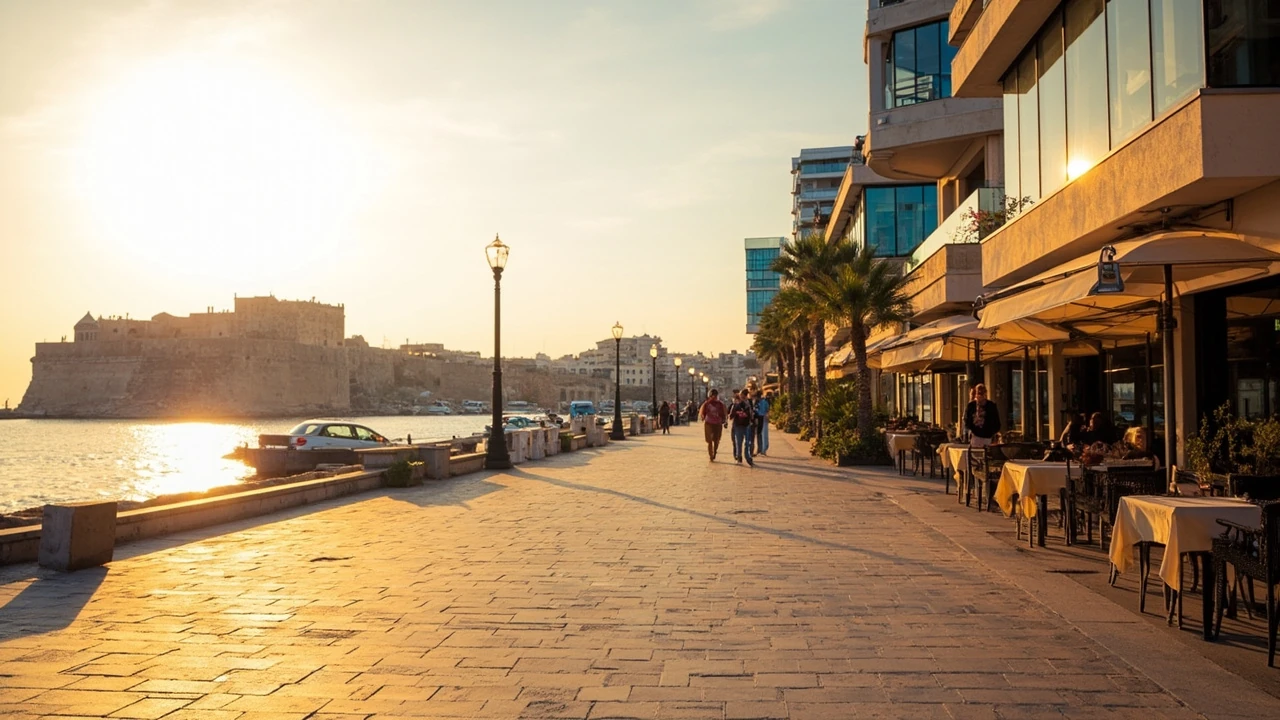
- Walk the Molos waterfront. The modern promenade creates a strong contrast with the old port. It is a straightforward route for seeing how the city expands north along the coast and how contemporary public space meets the working harbor.
- Return to the center for dinner. The evening can be spent around the castle, old town, or a nearby restaurant district without repeating the full promenade. A second walk is worthwhile when the weather is clear and the visitor wants to understand the change in atmosphere between afternoon and night.
Visitors often make the first day too ambitious. Six stops across a large coastal city can sound efficient on a map but produce a day spent in transit. Limassol rewards slower movement in the center. A few blocks around the castle can occupy more time than expected, particularly when stopping for coffee, a pastry, or a small shop.
Bring water, sun protection, and shoes suitable for uneven paving. The coast looks easy to cross on a map, but the historic center’s lanes and changes in level can make distances feel longer. A light day bag is enough for most central outings; leave passports, extra cash, and valuables at the accommodation unless they are genuinely needed.
If the first day includes a scheduled excursion, reverse the order and move the central walking section to another day. The city is not diminished by being explored gradually. Its best moments tend to occur when there is enough time to notice ordinary activity around the harbor and streets.
Beaches, coast, and nearby ruins
The central Limassol waterfront is primarily an urban promenade rather than a sequence of sheltered swimming beaches. For a classic beach day, most travelers need to continue along the coast. The better choice depends on whether the priority is swimming, scenery, archaeological interest, or a simple break from the city.
| Destination or area | Best for | Important distinction |
|---|---|---|
| Molos and the central waterfront | Walking, harbor views, restaurants, and a first introduction to the coast. | This is a city promenade, not the city’s main swimming beach. |
| Southern coastal beaches near Amathus | Families, swimmers, and travelers combining sand with a visit to the archaeological area. | Beach facilities and the exact site layout should be checked for the season of travel. |
| Akrotiri peninsula | Scenery, a longer coastal drive, and travelers looking for a less urban shoreline. | Its position makes it better treated as part of a half-day or full-day route. |
| Kourion area | Ancient ruins, a high coastal setting, and a substantial excursion south of Limassol. | The journey is longer than a casual beach outing and deserves its own day. |
The medieval city developed between two ancient sites, Amathus and Kourion, and this geography helps explain the wider landscape. Amathus lies close enough to the southern edge of the city for many travelers to pair with a beach morning. Kourion requires more travel and should not be squeezed between two other appointments simply because it appears on a list of nearby sights.
A southern coastal day works best with this structure:
- Leave Limassol with enough time to reach the coast before midday.
- Begin with the ancient site or its surrounding area rather than driving directly between beaches.
- Use the hottest part of the day for lunch, shade, or a slower stop.
- Return to the waterfront only if the driver and passengers still have energy for a final coastal walk.
Beach access and services can change with weather and season, so verify current conditions locally rather than relying on an old photograph. Carry water, sun protection, and a light cover for the strong coastal sun. Footwear should be suitable for both sand and stone surfaces when an archaeological site is part of the plan.
For travelers who prefer to separate culture from beach time, a city-based Limassol itinerary can offer both without treating every day as a transfer. Spend the center portion of the trip around the harbor and old town, then dedicate a separate day to the southern coast. This is especially sensible when accommodation includes a pool and the intention is to rest as well as explore.
History without losing the present-day city
Limassol’s historical interest comes from continuity. The medieval core around the castle and old port sits within a city that developed under Byzantine, Crusader, Venetian, Ottoman, and British periods. The story is compelling, but it becomes easier to understand when a visitor connects each era to the physical fabric visible today.
| Historical layer | What shaped Limassol | What remains visible today |
|---|---|---|
| Ancient Cyprus | The district stands between Amathus and Kourion, with evidence of settlement extending back into the Neolithic period. | Nearby archaeological areas provide the clearest connection with the region’s earliest history. |
| Medieval kingdom | Trade through the harbor supported merchants and institutions during the period of the Lusignan kingdom. | The castle and old town preserve the focal point of the historic city. |
| Venetian and Ottoman periods | Control changed hands, and the castle was repeatedly damaged, rebuilt, and adapted for new uses. | The fortress form and the relationship between the old port and the coast remain central to the visit. |
| British administration | Roads, port facilities, public buildings, schools, printing, clubs, and hotels contributed to urban growth. | Much of the city’s later expansion took place beyond the medieval core. |
| Modern Limassol | Population movement and the loss of Famagusta’s commercial role helped Limassol expand rapidly. | The city is now a major commercial and hospitality center as well as a coastal destination. |
A useful historical walking route moves from the old port toward the castle and then into the surrounding streets. The harbor shows the city’s practical relationship with the sea, while the castle marks its defensive and administrative center. The point is not to memorize a long chronology but to understand why the old town is compact and why the modern city opens toward a much larger port.
Limassol’s name also reflects its position between ancient settlements. The name developed from the ancient Greek “Nemesos,” associated with a location found between Amathus and Kourion, before evolving into the form known today. That fact is a useful starting point for visitors planning an archaeological excursion.
Choose one historical stop for a guided explanation if the subject is genuinely interesting. A local guide or a well-chosen museum can make the Crusader, Venetian, Ottoman, and British layers easier to distinguish. The attraction does not require extensive historical background, but it benefits from a small amount of context.
One nearby historical comparison can add perspective to a broader island trip. The layered civic history described in The History of France Did Not Begin With Paris shows why old capitals and modern commercial centers do not always begin in the same place. Limassol makes the same point on a smaller scale: the most visible medieval core is only one part of a much longer urban story.
Where to eat and what to order
Limassol supports a wide range of dining choices, from inexpensive local meals to elaborate hotel restaurants and international menus. The most useful approach is not to search for a single “best” restaurant but to match the meal to the neighborhood and the traveler’s priorities.
| Meal or setting | Where it fits best | How to choose |
|---|---|---|
| Breakfast in the historic center | Old town, castle, and nearby streets. | Look for a busy local café with a compact menu and a table outside. |
| Midday local meal | Central streets or established residential corridors. | Choose a restaurant that serves lunch at a practical time and accepts walk-ins if plans are flexible. |
| Harbor meal | Old port and the wider seafront. | Confirm whether the table’s view or the food is the priority; the two do not always align. |
| Long dinner | Modern waterfront, center, or a neighborhood known for evening dining. | Reserve when the restaurant is popular, especially for a weekend table. |
| Light coastal meal | Southern districts or beach areas on an excursion day. | Check the day’s route before selecting a distant restaurant. |
Cyprus has its own well-established food culture, but the ideal dish depends on personal taste and the restaurant’s specialization. Grilled meat, fish, meze-style small plates, vegetables, legumes, and fresh bread are recurring choices. Rather than treating one dish as mandatory, order according to the style of the restaurant. A place devoted to grilled meats should not be judged by a vegetarian plate, while a meze meal is specifically about sharing several smaller portions rather than ordering one enormous dish.
Use these dining rules to reduce friction:
- Eat a substantial lunch before an active coastal walk, especially in warmer months.
- Try the old town for atmosphere and smaller meals, but reserve ahead if a specific restaurant is important.
- Use a waterfront dinner for convenience and views, and the harbor for activity, rather than expecting the same experience at every table.
- Ask about ingredients and preparation when dietary requirements are strict; do not assume a dish is suitable because it appears meat-based or vegetable-based.
Restaurant opening days and service times can change, and beachfront businesses may operate on seasonal schedules. Confirm details for any place the itinerary depends upon. The same caution applies to beach cafés and less central dining establishments. Central choices are generally easier to verify through current listings, but availability still matters when the city is busy.
Finally, do not make every meal a coastal-view decision. A meal near the old port, in a shaded courtyard, or in a neighborhood restaurant can be more rewarding than a generic meal facing the sea. Limassol’s strongest food experiences often depend on the quality of the meal and the atmosphere of the room rather than on a single view.
Getting around and planning a longer stay
Transport in Limassol depends on the itinerary. The historic center and waterfront can be explored on foot, but the wider district stretches far enough that a car becomes useful for beaches and archaeological sites. Short trips across central Limassol do not justify the inconvenience of renting a vehicle, especially when parking and traffic add friction.
| Travel method | Best for | Limitations |
|---|---|---|
| Walking | Castle, old town, old port, central promenade, and nearby shops. | Hot weather and uneven streets make a midsummer midday route less comfortable. |
| Taxi or ride-hailing | Transfers between central hotels, the waterfront, and outer neighborhoods. | Traffic and surge pricing can affect longer journeys, so confirm the route and fare in the app. |
| Rental car | Southern beaches, Akrotiri, Kourion, and self-directed coastal routes. | Parking, fuel, insurance terms, and left-side driving require attention. |
| Organized excursion | Visitors wanting archaeological context or a day route without navigating. | Schedules can be rigid and may offer limited free time. |
| Public transport | Travelers who mainly need links between the center and nearby urban districts. | It is less convenient for several beach stops or remote archaeological locations. |
Visitors driving on a UK or US license should confirm the current requirements before booking. Cyprus drives on the left, which is different from both the United States and most continental European countries. The main difficulty is not speed but recurring decisions at roundabouts, junctions, and quieter roads. Allow extra concentration during the first day and avoid turning an unfamiliar route into a timed race.
For a longer stay, organize the week around alternating environments. A reliable pattern is one day for the historic center, one day for the southern coast, one day for a wider western excursion, and another day with no fixed schedule. Limassol is most enjoyable when the itinerary contains enough unstructured time for a second coffee, an unplanned coastal walk, or a restaurant that cannot be booked immediately.
Seasonal planning matters as much as transport. Summer brings stronger sun, longer daylight, and more outdoor activity, but walking at midday can be uncomfortable. Winter offers a gentler climate for old-town exploration, while the sea and outdoor attractions may feel less inviting. The correct season depends on the desired balance between city time and beach time. Travelers focused on ruins and walking can place those activities in the cooler part of the day; travelers focused on the water can build the day around early or late coastal hours.
To make the most of a stay, use this checklist:
- Book only the reservations that matter: the first difficult dinner, a specific tour, or transport with limited availability.
- Save the central walking route for a day with comfortable weather.
- Group southern beaches and Amathus into one outing; give Kourion its own route if time allows.
- Download the map locations for the hotel, harbor, castle, and planned restaurant before leaving the accommodation.
- Carry water and sun protection even when the day’s plan is mostly urban.
- Confirm opening days, beach services, and excursion times close to travel rather than relying on static web pages.
The same city can reward different priorities. A visitor interested in architecture may spend the entire first day in the old center, while a driver may use the compact center as a single stop before continuing south. Limassol’s strongest advantage is that both styles remain available within one destination.
For a broader sense of how coast and landscape can shape a destination, Costa Rica Landmarks Are Mostly About Nature – and That Is the Point offers a useful contrast. Limassol is a city-centered coastal destination: its beaches matter, but its identity is also tied to streets, commerce, the harbor, and the historical core.
Frequently asked questions
Is Limassol a good place for a first visit to Cyprus?
Yes. Limassol is practical for a first visit because it combines a walkable historic center, a major harbor, modern hotels and restaurants, coastal scenery, and access to ancient sites. Travelers who want a lively base with varied day trips generally find it easier to organize a short stay here than in a more remote coastal settlement.
How many days should I spend in Limassol?
Two full days are enough for the central city and one excursion. Three or four days provide a more comfortable pace and allow separate outings for Amathus, Kourion, or the western coastline. The best duration also depends on whether the accommodation has a beach or pool, since restful days can change how many outings a visitor needs.
What is the best area to stay in Limassol?
For a first trip, the castle, old town, old port, or modern waterfront area offers the easiest access to restaurants, services, and daily activities. Stay farther south or west if a beach is the priority and the traveler is comfortable with a car. Compare the hotel’s exact map position rather than selecting only from a broad neighborhood label.
Can I swim near central Limassol?
The central waterfront is primarily a promenade and harbor environment rather than the city’s main swimming area. Travelers seeking sand and conventional beach facilities should continue toward the southern or western coastal areas. Current access and services vary by beach and season, so check conditions locally before traveling with equipment for a specific cove.
Is Amathus worth visiting from Limassol?
Amathus is one of the most relevant historical stops because it belongs to the landscape in which ancient Limassol developed. It can be paired with a southern coastal outing, but it deserves time beyond a brief photograph stop. A guided visit adds context to the ruins and the area’s long history.
Do I need a rental car to visit Limassol?
A car is optional for the central city because the castle, old port, and promenade are easy to reach on foot. It becomes more useful for combining southern beaches, Akrotiri, and Kourion in one trip. Visitors who are unfamiliar with left-side driving should choose a short practice route and allow more time for the first junction.
What should I do in Limassol on a rainy day?
Concentrate on the castle and old town, where narrow streets and the fortress provide a substantial itinerary even without beach weather. Add a long lunch, café stop, or local museum before returning to the waterfront for a shorter evening walk. Avoid forcing distant excursions into poor weather simply to complete a checklist.
Is Limassol suitable for a family holiday?
It can be, especially for families who value restaurants, services, harbor activity, and access to beaches farther along the coast. The center offers more daily variety than a small resort, while a pool can make the heat manageable. Drivers should plan beach trips carefully because the city’s urban spaces and the coast are not always within a short walk.
What is the best time of year to visit Limassol?
Spring and autumn generally favor comfortable walking and sightseeing, while summer suits travelers who want beach time and will adjust the daily schedule around the stronger sun. Winter is useful for old-town exploration and fewer crowds, although travelers focused on swimming should check seasonal conditions. The best choice depends on whether history, beaches, or a relaxed city break matters most.
How should I spend one full day in Limassol?
Start with breakfast near the center, walk around the castle and old town, continue to the old port, and have lunch before the hottest part of the day. Follow the waterfront promenade in the later afternoon, then return to the castle or old town for dinner. If the plan includes a distant beach or archaeological site, move the central walking portion to another day rather than rushing both.



Leave a Reply