
Argentina landmarks: how to choose the right sights for your trip
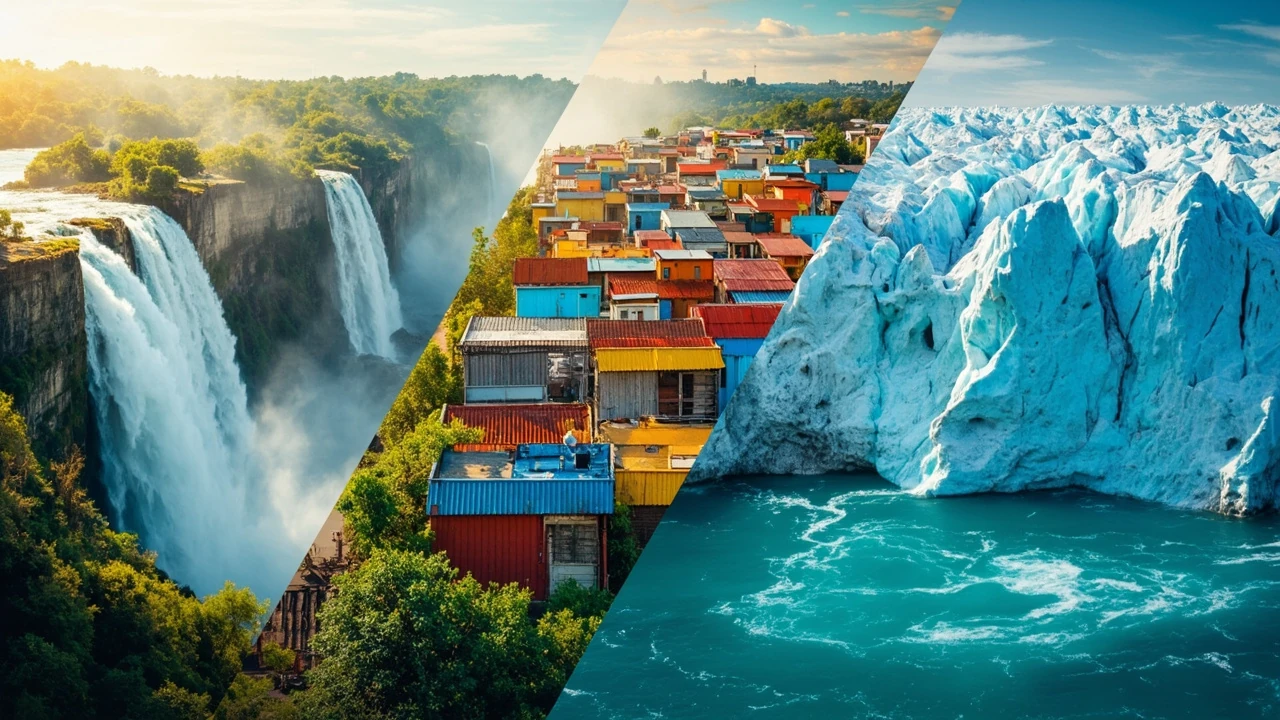
A first-time visitor cannot see the defining Argentina landmarks in a single weekend. Iguazu Falls alone sits on the border with Brazil, while Perito Moreno Glacier requires travel deep into Santa Cruz Province, and Buenos Aires spreads its historic neighborhoods across a capital built through waves of immigration. Choosing one famous sight can consume a day; choosing two or three without considering geography can consume much more of the itinerary.
The best approach is to match the place with your interests and the amount of time available. Buenos Aires works for architecture, performance history, and neighborhood culture. Patagonia suits travelers who want open landscapes, glaciers, and wildlife. The northwest adds high-altitude salt flats and colorful mountain towns, while the Andean west offers serious mountaineering or gentler views of Aconcagua. This guide compares the major Argentina landmarks by location, experience, planning demands, and the kind of traveler who will get the most from each one.
Visitors also need to separate a destination from an activity. A city landmark can be explored on foot in a few hours, a natural attraction may require a full day, and a mountain summit can demand several weeks of preparation. The same landmark may also offer different experiences depending on the season. This guide compares these differences rather than treating every famous place as a similar stop on a sightseeing checklist.
Which major Argentina landmarks fit your travel style?
Start with the kind of day you want, then work backward to a region. That approach is more reliable than beginning with a long list of names because the distances between them are substantial. A landmark that looks close on a map may still require several hours of road travel, a domestic flight, or a dedicated transfer.
| Landmark | Region | Best for | Planning reality |
|---|---|---|---|
| Recoleta Cemetery | Buenos Aires | Architecture, history, and prominent burials | Accessible within a central-city itinerary |
| La Boca and Caminito | Buenos Aires | Street art, tango, and colorful buildings | Best experienced in daylight |
| Teatro Colón | Buenos Aires | Architecture and performing arts | Prioritize a performance or an organized visit over an exterior photo stop |
| Iguazu Falls | Misiones Province | Waterfalls and subtropical forest | Allow a dedicated day and choose the Argentine or Brazilian side carefully |
| Salinas Grandes | Jujuy and Salta provinces | High-altitude scenery and regional road trips | Strong sun, altitude, and long distances require preparation |
| Peninsula Valdes | Chubut Province | Whales, sea lions, penguins, and coastal wildlife | Wildlife timing and access conditions matter |
| Perito Moreno Glacier | Santa Cruz Province | Glacier scenery and accessible viewing platforms | Plan around El Calafate and allow time for changing weather |
| Aconcagua | Mendoza Province | Experienced high-altitude mountaineering | A major expedition rather than a short sightseeing outing |
This travel overview of the country’s major sights highlights how different the planning requirements can be. It is useful for a first comparison, but it should not replace current information from park authorities, attraction operators, or transport providers.
A few broad decisions will narrow the list quickly:
- Choose Buenos Aires for a short trip. The capital concentrates major cultural landmarks within a manageable urban area and works well for travelers who cannot commit to long transfers.
- Choose Patagonia for landscapes and wildlife. Distances are longer, but the reward is a more varied environment of glaciers, steppe, coast, and open sky.
- Choose the northwest for altitude and regional scenery. Salt flats, mountain passes, and desert landscapes suit travelers who want to understand Argentina beyond its capital.
- Choose Aconcagua only with expedition experience. The park and lower viewpoints are accessible to many visitors, but the summit requires permits, acclimatization, and serious preparation.
If your schedule allows only one major regional experience outside Buenos Aires, choose based on scenery versus wildlife versus walking. A glacier offers close views of moving ice, Peninsula Valdes offers coastal animals whose presence varies by season, and the northwest offers broad landscapes encountered along a road journey. Those are different trips, even when all three appear on a map of Argentina landmarks.
Buenos Aires landmarks: architecture, performance, and immigrant history
Buenos Aires is the easiest place to begin a short introduction to the country. Its major sights reveal the capital’s development through European immigration, political history, port commerce, and the arts. They also fit together geographically better than Argentina’s distant natural attractions. However, treating the city as an outdoor museum misses how its neighborhoods function. The most rewarding visits combine architecture with an understanding of how people live, work, eat, and perform.
La Boca and Caminito
La Boca sits beside Buenos Aires’ old port and has strong associations with Italian immigrant communities. Its brightly painted buildings, street art, tango, and football culture make it one of the city’s most recognizable districts. The traditional association between the neighborhood’s colors and leftover ship paint is part of its popular history, though the modern streetscape also reflects decades of resident artists and community work.
Visit during the day, when the principal tourist streets are easier to read and the area has a more active relationship with its neighborhood life. Look beyond the most photographed stretch of Caminito to see working port surroundings, local businesses, and residential lanes. This is also a useful place to understand a recurring feature of the city: monumental Buenos Aires landmarks often sit within dense, lived-in districts rather than inside isolated historic compounds.
Recoleta Cemetery
Recoleta Cemetery is an unusual attraction because it is both a burial ground and a collection of architectural statements. Its narrow paths, elaborate mausoleums, statues, and family vaults display a range of styles, including neoclassical and Art Deco work. Eva Peron’s tomb is among the most visited, but the broader value lies in reading how different families expressed status, memory, and belief.
A guided visit is especially useful for travelers who want historical context rather than only a landmark photo. The history of France offers a useful parallel for understanding how imported architectural traditions can be reshaped by local culture. In Buenos Aires, though, the cemetery works best as evidence of the capital’s own immigration history. Leave enough time to follow the paths slowly rather than searching only for the best-known tomb.
Teatro Colon
Teatro Colon stands near the city center and is one of Argentina’s most prominent cultural landmarks. Its exterior establishes it as a major piece of Buenos Aires architecture, while the interior is especially associated with its acoustics and elaborate craftsmanship. The present theater opened in 1908 after a long construction period, and its design combines Italian Renaissance and French influences.
If possible, experience the building during a performance rather than treating it only as a daytime attraction. That turns the visit into an understanding of how the theater was designed to work. If the schedule does not align with a performance, check which interior access is currently offered and plan enough time for the site’s own visitor procedures.
- Central-city day: Recoleta Cemetery in the morning, a walk or drive along Avenida 9 de Julio, and an afternoon performance at Teatro Colon.
- Culture-focused day: La Boca, additional city museums or bookshops, and a separate visit to a venue with a scheduled program.
- Neighborhood day: Use public transit and walking to connect Recoleta, the city center, and nearby streets rather than attempting every Buenos Aires landmark in one drive.
The capital is strongest as part of a larger journey. Spending two or three nights there can provide context for a country whose geography, wildlife, and regional cultures extend far beyond the metropolitan area.
Iguazu Falls and the northeast: water, forest, and the border
Iguazu Falls is one of the clearest cases where a famous landmark exists across a national border. The waterfall system lies between Argentina and Brazil, with each country offering a different park and visitor experience. The falls consist of hundreds of individual cascades, but the most dramatic section is Devil’s Throat, where the river narrows before dropping into a deep, mist-filled gorge. The surrounding subtropical rainforest is an essential part of the experience.
Travelers should decide which side fits their priorities rather than attempting to treat both as interchangeable stops. The Argentine side is generally associated with a broad network of walkways and upper-view infrastructure, including platforms that give a sweeping perspective over the falls and river. The Brazilian side is often associated with a lower trail that brings visitors closer to the base of the cataracts. These descriptions are broad planning distinctions; current access, transport arrangements, and entry procedures should always be checked directly with the relevant authorities.
A For additional context, travel overview of the country’s major sights provides a useful introduction to the falls and to Argentina’s broader geographic range. It also highlights why the surrounding national park matters: the waterfalls are embedded in a biodiverse environment rather than isolated from it.
How long to stay
Most visitors need at least one full day for the falls, park trails, transportation between viewing areas, and breaks around the humid conditions. Two nights can make the visit more comfortable and reduce the temptation to rush between the airport, accommodation, and park gates. An extra day may also help if bird watching, guided interpretation, or surrounding nature is important.
What to prioritize
- Time on the walkways: Water volume, mist, wildlife activity, and comfortable viewing depend on conditions that can change during the day.
- Forest interpretation: Native plants, birds, and the relationship between the falls and surrounding ecosystem add context that a distant viewpoint alone cannot provide.
- Border logistics: Confirm which national park you are visiting, how you will reach it, and whether a multi-country itinerary affects your transportation plans.
- Rain protection: The paths can become wet and slippery, and waterproof clothing is more useful than an umbrella in strong wind or rain.
Iguazu works well beside other northern destinations. Travelers with more time can build a route through the northeast and northwest, although high-altitude roads and long distances mean that the itinerary needs to remain realistic. The falls are a major Argentina landmark, but they should not be mistaken for a quick side trip from Buenos Aires.
Northwest Argentina landmarks: salt flats, high passes, and mountain towns
The northwest contains some of the country’s most distinctive road-trip landscapes. Salinas Grandes, a broad white salt flat in the high Andes, contrasts with red and brown mountain formations, vivid lagoons, and dry valleys. For travelers who want to understand regional geography, this part of Argentina offers a different experience from the humid north and the icy south.
Salinas Grandes extends across parts of Jujuy and Salta provinces. Its surface formed as ancient lakes evaporated and left behind thick deposits of salt. The area remains important to the local economy, and designated stopping points often include guides who explain the landscape and salt-production process. Because the flats sit at high elevation, the visit is about more than taking in a white horizon.
Prepare for altitude and exposure
High altitude can make a short walk feel physically demanding, while intense sunlight increases the need for protection even when the air feels cool. Visitors should avoid rushing through the landscape without water, suitable sun protection, and time to adjust. Anyone with a medical condition or prior altitude difficulty should seek appropriate professional advice before travel.
Road conditions, access points, and seasonal weather can affect a northwest itinerary. Rather than promising a fixed number of stops, build in flexibility around the places that matter most to you:
- Choose the salt flats if dramatic open scenery and a high-altitude road experience are your main priorities.
- Choose mountain towns if local history, architecture, cafés, and a slower sense of place appeal more than dramatic natural formations.
- Choose a guided excursion when unfamiliar roads, altitude, and limited local knowledge could make independent exploration less comfortable.
The most useful map is not one that marks every possible stop. It is one that shows realistic driving times and leaves room for slow photographs, meals, rest, and unexpected weather. When evaluating Argentina landmarks in this region, separate the cost and effort of getting there from the time spent at the destination itself.
| Northwest travel need | Best approach | Main consideration |
|---|---|---|
| See Salinas Grandes comfortably | Travel with a local operator or informed guide | Altitude, sun exposure, and regional road conditions |
| Build a multi-stop road trip | Limit daily mileage and select a few anchors | Long distances between towns and provinces |
| Focus on local culture | Stay overnight in regional centers | More time for markets, food, and neighborhood life |
| Travel with limited mobility | Confirm accessible viewpoints and transfers in advance | Surface, elevation, and walking distances vary by site |
Travelers who compare Argentina landmarks across regions should remember that the northwest rewards flexibility. A carefully paced route is usually more rewarding than an ambitious itinerary that turns every stop into a brief photo break.
Patagonia landmarks: glaciers, steppe, whales, and changing weather
Patagonia contains the Argentina landmarks most closely associated with monumental natural scenery. Perito Moreno Glacier near El Calafate is the best-known example, but the peninsula also includes Peninsula Valdes, where visitors may see whales and other coastal wildlife. These destinations are separated by significant distances, and the best time to see one may not be the best time for the other.
Perito Moreno Glacier
Perito Moreno stretches for roughly 18.6 miles and is famous for its relative stability and frequent ice calving. Large pieces of ice break from the glacier into Lake Argentino, producing a dramatic wall of water and sound. Walkways allow visitors to view the glacier from land, while boat tours offer a different perspective from the water. Because the ice moves and the weather can shift, a visit should leave time for conditions that differ from expectations.
Do not treat the glacier as only a viewpoint stop. The surrounding Los Glaciares National Park includes a broader system of lakes, mountains, forests, and ice. The Costa Rica landmarks are mostly about nature, and that comparison illustrates a broader travel choice: a destination built around wildlife and ecosystems differs from a city-centered cultural trip even when both countries offer dramatic scenery.
Peninsula Valdes
Peninsula Valdes is a protected coastal area in Chubut Province. Its steppe, cliffs, beaches, and sheltered gulfs support marine mammals and birds. Southern right whales are the best-known seasonal attraction, appearing in the area’s calm waters between June and December to breed and nurse calves. Sea lions, elephant seals, penguins, and numerous bird species are also associated with the region.
Wildlife sightings depend on timing, location, weather, and animal behavior. A scheduled visit is more reliable than assuming a particular animal will be visible at a particular moment. Guided tours can also reduce disturbance and place access in context, particularly where visitors approach breeding or resting areas.
- Whale season: Southern right whales are generally associated with the June-to-December period.
- Other coastal wildlife: Sea lions, elephant seals, penguins, and birds may be encountered, but their visibility depends on local conditions.
- Responsible viewing: Follow guidance about distance, speed, and remaining on approved routes.
- Weather planning: Patagonian conditions can shift quickly, so outdoor activities need time and suitable layers.
Choose the glacier if your priority is seeing ice up close. Choose Peninsula Valdes if wildlife is the central interest. Trying to combine both in a short itinerary can produce a rushed journey through enormous distances. The stronger choice is usually the one that gives the visitor time to understand the landscape rather than merely collect scenic stops.
Aconcagua and Mendoza: mountain scenery or a serious expedition?
Aconcagua is the highest mountain in the Americas, reaching nearly 23,000 feet above sea level, and it dominates the landscape near Mendoza. For many travelers, the important distinction is between viewing the mountain environment and attempting to climb it. Aconcagua Provincial Park offers trails and viewpoints that reveal the scale of the surrounding Andes without requiring a summit expedition.
The summit should not be treated as an ordinary sightseeing goal. Even where a route is described as nontechnical compared with similarly high peaks elsewhere, climbers face serious altitude, weather, equipment, and logistical demands. Permits are required, and preparation normally involves acclimatization and an organized climbing progression. Visitors without mountaineering experience should not convert a dramatic photograph of Aconcagua into an improvised ascent.
| Option | Who it suits | What it involves | Main limitation |
|---|---|---|---|
| Park viewpoint visit | Travelers without climbing experience | Short hikes and mountain scenery | Weather and altitude still affect comfort |
| Aconcagua expedition | Experienced climbers seeking a major summit | Permit, training, acclimatization, equipment, and expedition support | Substantial expense, risk, and time commitment |
| Mendoza as a base | Wine-region and gateway-city travelers | City culture with access to surrounding mountains | The summit itself remains far beyond a day outing |
The practical rule is simple: if the trip’s purpose is to appreciate Aconcagua, build around viewpoints and the wider Mendoza region. If the purpose is to climb it, use qualified expedition support and allow the time required for a serious objective. Similar reasoning applies to all Argentina landmarks: first decide if you are visiting a place or undertaking a specific activity within it.
When to choose western Argentina
- Limited climbing experience:Choose scenic park routes, shorter walks, and the cultural attractions of Mendoza.
- Mountaineering background:Consider a formal Aconcagua climbing program with appropriate permits, equipment, and acclimatization.
- Photography priority:Build more than one opportunity into the itinerary because cloud, haze, and storm conditions can obscure a summit.
- Short overall trip:Keep Mendoza as the main base rather than adding distant destinations that would consume most of the travel time in transit.
Western Argentina rewards travelers who respect the scale of the Andes. The journey is less about collecting distant mountain photographs than understanding how altitude, weather, and access shape every decision.
How to build a practical route through Argentina’s landmarks
Distance is the most common planning mistake. Argentina is elongated from north to south, and its major attractions are not arranged around a convenient central loop. A route that looks efficient on a map can require repeated flights, long road transfers, or overnight journeys. A better plan starts with the regions that cannot be combined comfortably and then works inward.
For a first short visit
A first-time visitor who has only a week or two will usually get more from one or two regions than from an ambitious circuit. Buenos Aires provides an efficient introduction to the country’s culture and history. Travelers with a little more time can add Iguazu Falls. Patagonia needs more room because distances between El Calafate, Peninsula Valdes, and other areas are substantial.
For a two- to three-week itinerary
Choose one major natural region and keep the rest of the route focused. Patagonia can combine El Calafate with selected nearby destinations. The northwest can follow a road-based itinerary through Salta and Jujuy. The northeast can center on Iguazu and add carefully selected stops nearby.
Before booking connections, make a simple transport ledger:
- List each destination in geographic order.
- Record the realistic travel time between consecutive stops.
- Subtract airport, transfer, and waiting time from the schedule.
- Keep one weather-sensitive or activity-sensitive day flexible where possible.
- Avoid adding another landmark merely because it appears on a long list of Argentina landmarks.
Domestic flights can connect major cities, but a flight is not instant access to a final destination. A traveler may arrive late, collect luggage, and still face a long transfer. Arrival timing, baggage rules, and the distance between the airport and the actual site all matter.
| Trip length | Comfortable approach | Avoid |
|---|---|---|
| Under one week | Buenos Aires plus one nearby regional choice | Attempting Patagonia and the northwest together |
| One to two weeks | One major region with several nearby experiences | Scheduling a different climate every day |
| Three weeks or more | Two regions with a clear transport connection | Adding remote areas without recovery time |
A strong itinerary also leaves room for ordinary travel days. Museum visits, meals, neighborhood walks, and rest are not wasted hours. They help travelers absorb the history and daily life behind the headline sites.
Prepare for access, weather, and respectful travel
Landmark access can change. Trails may close, weather may interrupt boat or hiking activities, transport can be delayed, and entry procedures may differ between national parks on opposite sides of a border. Visitors should confirm current information with official park authorities, attraction operators, and transport providers shortly before each visit.
Conditions also vary sharply within Argentina. The northeast can be humid and intensely green, Patagonia can be cold and windy even in summer, the northwest can have strong ultraviolet exposure at elevation, and Mendoza can experience intense sunshine. Layering, sun protection, water, and suitable footwear are more useful than trying to pack for one generalized climate.
- Check official access information:Confirm trail openings, operating schedules, weather restrictions, and park requirements before leaving your accommodation.
- Carry regional essentials:Pack water, sun protection, insect repellent where appropriate, warm layers, and a small day bag.
- Respect wildlife:Maintain distance, follow guide instructions, and avoid noise or movement that could disturb animals.
- Respect communities:Support locally owned services, ask before photographing people, and treat cultural and religious sites thoughtfully.
- Protect the environment:Stay on marked paths, carry out waste, and avoid collecting rocks, plants, or other natural objects.
Responsible travel is especially important at places where visitors can influence wildlife behavior or damage fragile terrain. The best landmark experience is one that leaves the site usable and the animals undisturbed. This applies in Iguazu’s forest, Peninsula Valdes’ coastal habitats, and the exposed terrain of Patagonia just as much as it does in a busy city center.
Cash, connectivity, language support, and payment methods can also vary outside major cities. Because these details change, treat general travel advice as a planning prompt rather than a guarantee. Ask locally when the cost of a wrong assumption is high, particularly for remote transport or an activity that cannot be repeated.
A final pre-departure checklist
- Confirm that every timed activity and transport connection has an appropriate buffer.
- Check official park and attraction notices for closures and environmental restrictions.
- Pack for the actual conditions of each region rather than the forecast for one city.
- Carry identification, insurance details, emergency contacts, and copies of essential bookings.
- Download offline maps and translations where cellular service may be unreliable.
- Reconfirm accommodation details for remote areas, including arrival instructions.
- Set realistic expectations for wildlife sightings, weather, and photography.
The best route through Argentina landmarks is not the one that covers the most names. It is the one that gives each place enough time to be understood and leaves enough margin for the country to surprise you.
Frequently asked questions
What are the most famous Argentina landmarks?
The best-known choices include Iguazu Falls, Perito Moreno Glacier, Recoleta Cemetery, Teatro Colon, La Boca and Caminito, Peninsula Valdes, Salinas Grandes, and Aconcagua. Their appeal varies considerably: some are natural attractions, some are cultural landmarks, and others combine scenery with a difficult activity such as climbing.
Which Argentina landmarks are easiest to visit?
Buenos Aires offers the most convenient concentration of major sights. Recoleta Cemetery, La Boca, and Teatro Colon can be incorporated into a city itinerary without the long transfers required for Patagonia or the northwest. Iguazu is also manageable with a dedicated visit if transport and entry plans are arranged in advance.
Can you see Iguazu Falls from both Argentina and Brazil?
Yes, because the waterfall system extends along the border, with national parks on both sides. The Argentine and Brazilian experiences emphasize different routes and viewing perspectives. Choose according to your time, preferred trail style, and confirmed transport plan rather than assuming one side is suitable for every visitor.
Is Patagonia worth the long journey from Buenos Aires?
It can be, particularly for travelers whose main interests are glaciers, wildlife, mountains, and broad landscapes. The journey is most worthwhile when you remain in the region long enough to experience more than one carefully chosen destination. A short add-on with extensive transit time may deliver less than a focused trip centered on one area.
What is the best time to see whales at Peninsula Valdes?
Southern right whales are associated with the area from June through December, when they use sheltered coastal waters for breeding and nursing calves. Sightings are never guaranteed, and other wildlife has different patterns. A guided visit can help travelers understand where and when viewing is most appropriate.
Can visitors see Aconcagua without climbing?
Yes. Aconcagua Provincial Park has trails and viewpoints that provide views of the mountain and surrounding Andes. The summit is a very different undertaking requiring permits, acclimatization, suitable equipment, and extensive preparation. Travelers without mountaineering experience should not attempt to summit on a sightseeing schedule.
How many days are needed for Argentina landmarks?
A short city-focused trip can cover several Buenos Aires landmarks in four or five days. Iguazu deserves a dedicated day and is easier to combine with another northeastern stop. Patagonia and the northwest generally need more time because destinations within each region are widely separated. Adding days at the beginning or end can also reduce the pressure of the core itinerary.
Is altitude a concern at Salinas Grandes and Aconcagua?
It can be. Salinas Grandes is a high-altitude destination, while an Aconcagua climb introduces much more serious elevation demands. Travelers should ascend gradually when advised, take breaks, use sun protection, and seek medical guidance when appropriate. Anyone with heart or respiratory conditions should discuss travel plans with a qualified professional.
Should Argentina landmarks be visited by rental car, bus, or plane?
The best mode depends on the region. Major cities are well connected by domestic flights and buses, while remote natural areas may require a mix of flights, organized tours, and local road transfers. Renting a car offers flexibility in some regions but can add stress in mountain weather or unfamiliar terrain. Compare total door-to-door time, not just the advertised flight duration.
What is the best season for a first Argentina landmark tour?
There is no single best season for the entire country. Conditions in Patagonia, the northwest, Patagonia’s Atlantic coast, and Buenos Aires differ. The most useful approach is to choose the regions you want to visit, check their seasonal patterns, and allow flexibility for weather and wildlife. The farther south the destination, the more important it is to avoid treating a short ideal-weather window as a guarantee.
Leave a Reply