
Dominican Republic attractions for every kind of traveler
The Dominican Republic attractions that deserve the most attention span far more than a resort beach. History buffs can walk through the colonial streets of Santo Domingo, while adventure travelers can hike toward Pico Duarte, explore mountain villages, or travel to the Samana Peninsula for whales and waterfalls. Punta Cana remains the easiest major coastal destination for many visitors, but the same country also contains quiet beaches, Caribbean ports, coffee country, protected landscapes, and local food traditions that are rewarding to explore beyond the all-inclusive perimeter.
Choosing where to begin depends on how long you have, whether you prefer history or outdoor activity, and how much you value a structured resort experience. The most useful approach is to select one or two primary regions rather than trying to cross the country between every major stop. A week can cover one coast and its cultural center, while ten days or more opens the possibility of combining Santo Domingo with either the south or the Samana Peninsula.
This guide focuses on the places worth planning around, the experiences that work best in each area, and the practical tradeoffs that shape a good itinerary. Distances look manageable on a map, but road conditions, transfer times, and the amount of the country you want to experience can make rushing from one region to another a disappointing choice.
How to choose the right Dominican Republic attractions for your trip
The country divides into several distinct travel zones. Santo Domingo and the southeast coast suit travelers who value culture, nightlife, easy resort access, and a relatively compact first trip. The north coast adds mountain scenery, colonial cities, and dramatic coastal terrain. The Samana Peninsula is more nature-oriented, with beaches, waterfalls, wildlife experiences, and a road trip feel. Interior highlights such as Jarabacoa and the mountain route toward Constanza reward travelers who want more outdoor time and less resort time.
| Region | Best for | Typical trip length | Main advantages | Main limitation |
|---|---|---|---|---|
| Santo Domingo | History, food, nightlife | 2 to 4 days | Rich colonial core, museums, strong restaurant scene | Some popular sights require dedicated walking time |
| Punta Cana and La Romana | Beaches, resorts, water activities | 3 to 6 days | Wide range of lodging, convenient airport access, family options | Large resort areas can feel self-contained |
| Samana Peninsula | Nature, road trips, slower travel | 2 to 4 days | Waterfalls, green hills, beaches, wildlife experiences | Fewer direct transport options than the main resort corridor |
| North coast and Puerto Plata | Culture, history, mountains | 2 to 4 days | Fortress history, colonial streets, cable-car and beach scenery | Road transfers take longer than map estimates suggest |
| Jarabacoa and Constanza | Hiking, rivers, rural scenery | 2 to 3 days | Cooler highland atmosphere, outdoor activities, distinctive landscapes | Less suitable for travelers who want a fixed resort routine |
Before splitting the trip, consider these practical questions:
- Do you want history without much travel? Make Santo Domingo your base and visit its Old City, modern neighborhoods, and nearby beaches from there.
- Is a resort essential? Stay in the southeast, where major beach resorts, airport transfers, restaurants, and excursions are concentrated.
- Would you rather explore than relax? Choose the Samana Peninsula or the north coast, but allow more time for roads and local transfers.
- Do you have limited mobility? Choose a smaller base and confirm how much walking, stairs, uneven pavement, or boat movement each activity requires.
- Are you traveling with children? Shorter beach days, wildlife activities with clear age guidance, and fewer long transfers usually work better than an itinerary that changes hotels every night.
Seasonality also matters. The Atlantic coast has a defined wet and dry rhythm, while the Samana Peninsula can bring different weather conditions than the southeast. The mountains are generally cooler than the coast. Whale watching in Samana is seasonal rather than year-round, so that experience should shape the timing of the entire trip instead of being treated as a guaranteed add-on.
Historic Santo Domingo: the oldest urban sights in the country
Santo Domingo is the most practical place to begin understanding Dominican history. Its Colonial City preserves streets and buildings from the period when the island was the capital of Spanish colonial administration. Rather than treating the zone as a single museum, travelers can approach it as a living district with plazas, churches, fortifications, narrow streets, markets, and everyday neighborhood life around the restored core.
The Zona Colonial is best explored on foot. Wear comfortable shoes, carry water, and expect uneven surfaces. Side streets can be shaded and residential, while the larger avenues and plaza areas are busier. Morning visits often feel calmer and provide better opportunities to observe street activity before the midday heat.
| Santo Domingo area | What to experience | Why it is worth time | Best approach |
|---|---|---|---|
| Zona Colonial | Fortaleza de San Carlos, Almirante Fournier, Parque Colon, and Casa del Almirante | Combines Spanish colonial history with streets that remain part of the city | Walk a planned loop, then continue beyond the main monuments |
| Ciudad Nueva | Plaza de la Cultura, modern Santo Domingo, and nearby parks | Shows how the capital developed beyond the colonial core | Pair with a short urban driving or walking route |
| Ciudad Nueva riverside area | Malecón and views along the Ozama River | Offers a change of pace after dense colonial streets | Visit late in the day when conditions are cooler |
| Local food districts and markets | Street food, lunch counters, and regional dishes | Introduces everyday Dominican flavors beyond restaurant menus | Choose busy stalls with quick turnover and follow local hygiene guidance |
The National Botanical Garden deserves a separate place in the itinerary. It provides a shaded, green contrast to the dense historic center and is especially useful for a slower morning or a family break from urban sightseeing. The monastery complex at Boca Chica, across the bay from the capital, adds another layer of religious and colonial architecture for travelers with enough time to make the excursion.
Do not try to cover every landmark in one day. The historic core rewards attention, and a short visit to each monument often produces less understanding than a deliberate walk through several blocks. Leave room to stop at a cafe, watch street life, or return to a square after the midday heat has passed.
Punta Cana, Bayahibe, and Casa de Campo: choosing a coastal base
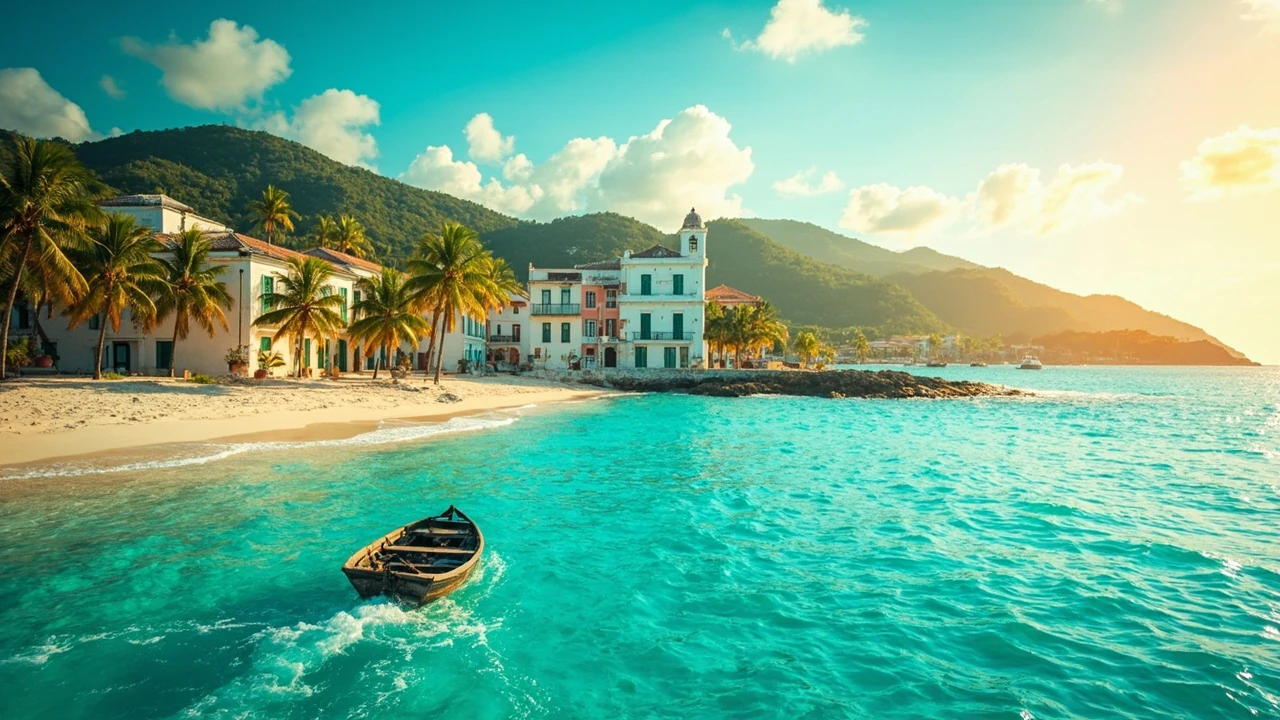
The southeast coast has the country’s most developed concentration of beach resorts. Punta Cana is convenient for a first visit because it offers a major airport, extensive lodging choices, and easy access to beaches and organized excursions. Bayahibe provides a smaller and more local-looking coastal center near Casa de Campo, while La Romana combines urban sightseeing with access to resort areas and the Altos de Chavon hillside complex.
These are not interchangeable bases. Punta Cana suits travelers who want variety and convenience. Bayahibe is appealing for those who prefer a slower town environment and short beach access. La Romana works well when a traveler wants both coastal time and a few city landmarks.
La Romana also has a distinct history linked to sugar, the Central Romana mill, and later tourism development. The city’s central sights include Santa Rosa de Lima Church, Central Park, Rotonda Park, and the Monument to the Bible. These form an urban sightseeing area separate from the surrounding coastal attractions. For additional background on the city and its evolution, the verified La Romana, Dominican Republic reference provides useful city-specific context without requiring a separate research trip.
What each coastal base is best for
- Punta Cana: travelers who prioritize convenience, a broad selection of resorts, and easy access to organized excursions.
- Bayahibe: visitors who want a compact coastal town, nearby beaches, and a more relaxed alternative to a large resort property.
- La Romana: travelers combining a city visit with beaches, golf-oriented areas, Casa de Campo, and day trips in the southeast.
- Casa de Campo: guests who want the resort setting to include recreation, landscaped grounds, and activities beyond the beach.
Water activities vary considerably. Snorkeling, swimming, boat excursions, paddleboarding, and visits to offshore sandbars each create different expectations. Weather, sea conditions, and the operator’s procedures affect what can actually happen on the day. A flexible itinerary is better than one that treats every advertised activity as fixed.
All-inclusive properties are convenient but can reduce the need to leave the grounds. If you want local restaurants, neighborhood streets, or independent shore excursions, select one or two days for a change of pace. Staying at least a few nights also makes it easier to reach beaches and natural sites without compressing the visit into a rushed day trip.
Samana Peninsula: beaches, waterfalls, and seasonal wildlife
The Samana Peninsula offers one of the strongest nature-focused alternatives to the resort corridor. Its roads pass through rolling green hills, small towns, coastal viewpoints, and beaches that feel less dependent on large-scale tourism. The peninsula rewards travelers who are comfortable with a slower pace and changing accommodation locations.
Water is the defining attraction. El Limón waterfall is reached through a scenic route with the final portion commonly traveled on horseback, while other falls such as Salto de El Choro can involve a more demanding climb. The conditions and access arrangements can change with weather and local conditions, so confirm practical details with an operator before departure.
Santa Barbara is the best-known beach area, but the peninsula contains smaller coves along the coast. Bahia de las Alacranes is associated with clear water and snorkeling, with boat operators taking visitors to different rocky and sandy locations depending on sea conditions. Playa El Valle offers another coastal landscape shaped by cliffs and secluded beaches.
| Samana experience | What to expect | Best time to plan | Important consideration |
|---|---|---|---|
| Whale watching | Boat-based wildlife viewing during the main whale season | Plan the peninsula around the season rather than adding it late | Availability depends on marine and weather conditions |
| El Limón | Travel through green countryside to a waterfall and swimming area | A full-day excursion | The route includes transport and an active final approach |
| Salto de El Choro | A steeper trail beside a narrow waterfall | A half-day or longer outdoor outing | Bring proper footwear and ask about current trail conditions |
| Beaches and snorkeling | Coastal swimming, boat trips, and marine scenery | A relaxed morning or afternoon | Allow for travel between the peninsula’s scattered locations |
The falls are not interchangeable. El Limón suits travelers who want scenery and a relatively guided visit with less technical hiking, while El Choro requires comfort with a steep, wet route. Choosing one well can be more satisfying than attempting both in a single rushed day.
Whale watching is the most seasonal attraction. Humpback whales are commonly associated with the Samana area during the winter season, with February and March often central to the viewing period. Sightings are never guaranteed, and responsible operators should explain how conditions affect the outing. Build flexibility into the schedule rather than treating a confirmed booking as a guaranteed wildlife encounter.
Puerto Plata and the north coast: history below green mountains
Puerto Plata is a practical base for travelers who want a mix of colonial history, mountain scenery, cable-car views, and beach time. The city’s Central Park and the Malecón provide an approachable urban waterfront, while the historic Fortaleza San Felipe and the former waterfront district add context to the area’s role in regional trade and colonial defense.
The cable car to Mount Isabel de Torres is one of the most recognizable north-coast attractions. It rises toward a mountaintop complex with broad views across the region. Visibility depends on weather, and the experience can feel different from a conventional city attraction because it combines transport, altitude, and a forested landscape. Arrive with enough time to enjoy the upper area rather than treating the ride itself as the entire visit.
- Walk the historic and waterfront center: Focus on the fort, Independence Square, the Malecón, and nearby streets to understand the city on foot.
- Use the cable car as a half-day outing: Combine the mountain ride with time in Puerto Plata instead of scheduling it as a brief stop between unrelated activities.
- Continue toward the beaches: The coast north of the city contains attractive shoreline scenery and options for a quieter beach day.
- Look beyond the city for local character: Coastal towns and inland routes reveal a different side of the north than the concentrated resort landscape.
Nearby natural sites such as the waterfalls at Damajagua and the 27 Waterfalls of Damajagua attract active travelers. The latter involves descending a route through water and rock rather than viewing the falls only from above. Conditions can be slippery, so guided participation and appropriate footwear matter. The Manabo hot springs offer another distinct landscape, with natural pools set into the inland countryside.
Because these places are spread out, avoid the common mistake of placing several distant activities on one day. A beach morning, an afternoon in the city, and a separate mountain or waterfall excursion will generally produce a better experience than a schedule built around constant transfers.
Jarabacoa, Constanza, and the interior: mountains and rural landscapes
The Dominican interior is often the answer for travelers who have seen the beaches and want something less predictable. Jarabacoa sits among green hills, rivers, and agricultural country near the northern foothills. It serves as a base for rafting, canyoning, caves, waterfalls, and mountain excursions. The surrounding scenery changes quickly, and many activities take place outdoors rather than within a single fixed attraction.
Constanza lies farther into the Cordillera Central and is often described as the country’s mountain capital. It is a useful stop for travelers who want cooler conditions, rural scenery, and a break from the humid coast. The area also provides access to Pico Duarte, the country’s highest summit.
The route toward the summit is long and should not be treated as a quick scenic stop. It is primarily a multiday trekking journey that requires suitable fitness, organized logistics, appropriate equipment, and consideration of weather. The summit lies within Jarabacoa National Park, and the elevation has reached above 3,000 meters. Cold conditions and rapid changes in mountain weather make preparation more important than simply reaching the trailhead.
| Interior attraction | Activity | Physical demand | Who should choose it |
|---|---|---|---|
| Jarabacoa | Rafting, canyoning, caves, waterfalls, mountain scenery | Variable by activity | Travelers seeking active days with a flexible pace |
| Constanza | Rural landscapes, mountain roads, local food, highland atmosphere | Low to moderate | Couples, families, and travelers who prefer scenery over nightlife |
| Pico Duarte | Multi-day trekking and mountain camping | High | Experienced hikers prepared for altitude and changing conditions |
| Interior rivers and farm areas | River landscapes, agriculture, small communities | Generally low | Travelers who want a slower look at regional life |
Outdoor operators in Jarabacoa offer different levels of challenge, so a general description such as “adventure tour” does not tell you enough. Ask how long the activity lasts, what physical demands are involved, what equipment is supplied, and what happens if weather changes the route. Those questions matter more than a dramatic description of the activity.
The interior also adds a useful contrast to the coast. Farm landscapes, mountain roads, local produce, and cooler evenings can make the trip feel more varied. It is particularly worthwhile for travelers staying longer or moving between the north coast and southeast without focusing only on resort scenery.
Build a trip around two strong bases, not a checklist of distant stops
A satisfying itinerary is usually less ambitious than a map full of pins. Select two primary bases and allow the day activities to radiate from them. A first-time visitor with four to six days can combine Santo Domingo with the southeast coast. Travelers who prefer nature might pair the Samana Peninsula with a short stay in the north. Those with more time can link La Romana, the north coast, and the interior without reducing every day to a transfer.
| Trip length | Suggested structure | Why it works |
|---|---|---|
| 3 to 4 days | Santo Domingo plus Punta Cana | Combines history with a manageable coastal finish |
| 5 to 6 days | Santo Domingo, Punta Cana, and a day trip toward the east | Adds variety without relocating the base every night |
| 7 to 9 days | Santo Domingo, Samana Peninsula, and one coastal resort area | Balances culture, wildlife, nature, and rest |
| 10 days or more | Santo Domingo, the north coast, Jarabacoa, and the southeast | Creates a north-to-south journey with meaningful regional depth |
For a ten-day first trip, a workable outline is three nights in Santo Domingo, two around the Samana Peninsula, two in the north coast area, and the remaining nights in the southeast. The order can be reversed to reduce backtracking. Add La Romana as a day or overnight stop only if the route is convenient; otherwise, Casa de Campo and Altos de Chavon can be experienced as part of a broader eastern excursion.
Transfer time deserves its own place in planning. A flight may look inexpensive but leave a traveler with a long ground journey, a late arrival, and a costly first morning. Long-distance buses can be efficient, while private drivers provide flexibility for groups or remote destinations. The right choice depends on the route, group size, comfort preferences, and the final leg to the accommodation.
Pack for the activity rather than the generic idea of “tropical travel.” Beach days need sun protection, swimwear, a cover-up, and sandals that can handle salt and sand. Historic walking requires reliable footwear. Mountain and waterfall trips benefit from higher-grip shoes, a small daypack, and layers. A compact rain layer is useful when an afternoon shower is possible, especially on mountain routes.
Food can be part of the itinerary rather than an afterthought. Try la bandera, a plate of rice, beans, and meat that varies by region; fresh seafood when it is prepared properly; and local fruit such as mango or guanábana when in season. Food stalls are best chosen where turnover is fast, produce looks fresh, and basic hygiene practices are followed. Travelers with dietary restrictions should communicate clearly and avoid assuming that every menu is prepared for allergies.
For broader comparisons on how natural landmarks shape a destination experience, the site’s discussion of Costa Rica landmarks and nature offers a useful contrast. The Dominican Republic is different because its strongest attractions combine coastal scenery with a deep Spanish colonial history, but both destinations show why natural places should be planned around local geography rather than treated as isolated photo stops.
Culture also deserves space beyond landmark checklists. The site’s guide to Sri Lanka’s religious diversity can help travelers recognize that religion in the Dominican Republic is woven into neighborhood life, festivals, architecture, and public space. As in many countries, the most memorable cultural observations may happen outside the principal tourist site.
Frequently asked questions
What are the best Dominican Republic attractions for a first visit?
For a first visit, Santo Domingo’s Colonial City and the beaches around Punta Cana provide a strong balance of culture and relaxation. Add a nature experience if the trip lasts longer than a few days. Travelers interested in wildlife and waterfalls may prefer spending that extra time on the Samana Peninsula instead of adding another resort area.
Which region is best for a family vacation?
Punta Cana and the wider southeast coast generally offer the broadest range of family-oriented resort facilities, organized activities, and transportation choices. Samana can be excellent for older children who enjoy wildlife and outdoor excursions. Santo Domingo is more useful for families interested in history, food, and city culture. Always check the minimum age, physical requirements, supervision rules, and cancellation terms for each activity.
What are the best Dominican Republic attractions for beach lovers?
Punta Cana, Bayahibe, the Samana Peninsula, and the north coast all serve travelers who prioritize beaches. The best choice depends on the desired setting. Punta Cana provides the most resort infrastructure, Bayahibe offers a smaller coastal-town atmosphere, Samana combines beaches with green scenery, and the north coast places the shoreline closer to historic cities and mountains.
Do I need to visit both Punta Cana and Samana?
Not for a short trip. Both are rewarding, but they offer different experiences and require a meaningful transfer. Choose Punta Cana for resort convenience and a wider selection of activities, or Samana for waterfalls, wildlife, scenic roads, and a slower pace. With a week or more, combining them can work if the itinerary does not become a series of rushed transfers.
Can I see whales in Samana every day of the year?
No. Humpback whale viewing is seasonal, with the main period concentrated in the winter months. The exact timing of individual trips depends on marine and weather conditions, and no responsible operator can guarantee a sighting. If whales are central to the trip, build in several possible outing days and keep the rest of the itinerary flexible.
Is Santo Domingo worth a full day?
Yes, especially for first-time visitors. The Colonial City alone can fill a morning and part of the afternoon, while the Botanical Garden, riverside area, and food districts provide useful additions. Two days offers a more relaxed visit, but one well-planned day works if you concentrate on a few districts instead of racing between distant landmarks.
What is the easiest Dominican Republic region for travelers with limited mobility?
An all-inclusive resort can offer the most predictable mobility support because elevators, ramps, transport, and accessible activities are often coordinated within one property. City exploration requires careful route selection, because older streets, steps, cobblestones, heat, and distances can create obstacles. Ask the hotel about accessible transportation and verify current conditions for any specific attraction before visiting.
Are the Dominican Republic attractions suitable for a romantic trip?
They can be, depending on the combination of activities. Punta Cana and Casa de Campo suit travelers who prefer resort time, Samana offers scenery and outdoor experiences, and Constanza provides a quieter mountain setting. For a trip centered on history and food, Santo Domingo adds cultural depth. A split stay between a city and a resort region often works better than staying exclusively in a busy party area.
How many Dominican Republic attractions should I plan for each day?
Most days should contain one primary experience and one or two supporting activities. Two major destinations can be reasonable when they are nearby, but a beach morning followed by a long mountain hike rarely leaves enough energy for a satisfying evening. Leave unscheduled time for transfers, changing weather, fatigue, or an attraction that deserves more attention than expected.
What is the best time of year for each region?
Conditions vary across the country, so the best time for one region may not be ideal for another. Samana wildlife viewing is tied to the whale season, while the southeast is often chosen for beach and resort weather. The mountains can be cooler but wetter or less predictable. Before booking, check regional weather patterns, current local advisories, and the operating dates of seasonal excursions rather than relying on a single countrywide forecast.
Leave a Reply