
Castilla La Mancha: where to begin
A first visit to Castilla La Mancha is easier to plan when you treat the region as a collection of distinct landscapes and historic cities rather than one compact destination. Toledo offers the strongest concentration of monuments, while Cuenca delivers dramatic cliffs, winding lanes, and some of the region’s most memorable views. Ciudad Real connects travelers with Don Quijote country, and smaller places such as Consuegra, Almagro, and Chinchón reward travelers who slow down.
This guide focuses on what American and other international visitors need to know: where to base yourself, how to connect the main sights, which towns deserve more than a quick stop, and how to manage transport without overloading the itinerary. It does not assume that you have a rental car, a generous amount of free time, or a fixed list of famous landmarks.
Castilla La Mancha is an autonomous community in central Spain, not a single city. Its territory includes the provinces of Albacete, Ciudad Real, Cuenca, Guadalajara, and Toledo. That administrative scale is important because the distances between major attractions can be substantial. A map may show several places close together, yet road travel, limited evening transport, and seasonal service can make a day trip more complicated than expected.
A For additional context, regional overview of the autonomous community is useful for understanding its geography and five-province structure. For sightseeing, however, the most practical approach is to choose two or three priorities. Attempting to visit Toledo, Cuenca, the windmills near Consuegra, the painted cave complex near Valencia de Don Juan, and the mountain roads of Guadalajara in one short trip can turn a scenic drive into a sequence of rushed stops.
What kind of trip fits this region?
The best itinerary depends less on the number of days than on your priorities. Toledo suits travelers interested in medieval architecture, religious art, and a city that can be explored on foot. Cuenca is a better fit for scenery, steep walking routes, and a slower small-city atmosphere. The southern part of the region, especially around Ciudad Real and Consuegra, works best for travelers drawn to open plains, traditional windmills, and Don Quijote associations.
Consider these four trip styles before booking transport:
- Architecture and history: Prioritize Toledo, with optional excursions to the smaller historic towns of Consuegra, Oropesa, and Almagro.
- Scenery and walking: Combine Cuenca with the Serranía de Cuenca, allowing enough time for viewpoints, village lanes, and short walks beyond the historic center.
- Road trip: Link Toledo with Ciudad Real, Campo de Calatrava, Consuegra, and possibly Almagro by car, stopping for meals and short walks rather than trying to cover every town.
- Food and wine: Base the trip around local kitchens, producer visits, and regional specialties in Toledo, Guadalajara, Albacete, or the wine country around Valdepeñas and El Provencio.
The region does not work especially well as a weekend extension from Madrid if your priority is ticking off distant sights. A train journey can make Toledo manageable, but the broader region is most rewarding when you accept that some days will include long stretches of travel.
Your pace also depends on the season. Spring brings comfortable conditions for villages, archaeological sites, and rural roads. Summer is hot in inland areas, with the strongest heat often felt in the plains. Autumn can be excellent for food and vineyard landscapes, while winter offers quieter conditions but shorter daylight and more weather-dependent access to rural attractions.
The main places worth prioritizing
These are not interchangeable destinations. Each serves a different purpose, and the comparison below highlights the best reasons to include it.
| Place | Best for | Typical time | Planning note |
|---|---|---|---|
| Toledo | Medieval architecture, old city views, cathedral and monastery collections | One full day for major sights; longer for a relaxed visit | Walking involves slopes and uneven surfaces. Plan where you need to be before choosing a hotel. |
| Cuenca | Cliffside old town, views, history, access to the surrounding highlands | One day, or two for the wider landscape | The old center sits above steep ground. Bring comfortable footwear and avoid overpacking a day bag. |
| Consuegra | Windmills, a hilltop castle, and Don Quijote country | A half-day stop on a longer route | Most travelers combine it with other stops around Ciudad Real rather than using it as a standalone base. |
| Ciudad Real | Convenient regional base, food, and access to southern towns | An overnight or a longer day with a regional loop | Useful for travelers arriving by rail or planning a road route. |
| Almagro | A compact historic center, preserved architecture, and a slower atmosphere | Two to four hours | Best paired with Ciudad Real, Oropesa, or other southern stops. |
| Guadalajara | Spanish history, architecture, and easier access to northern routes | A full day or overnight | Consider it as a distinct northern base rather than a quick appendage to the Toledo circuit. |
Toledo deserves the most attention if you have only one long day. The city’s historic core concentrates major Christian, Jewish, and Muslim legacies, while museums and viewpoints provide context that is missing from a checklist approach. However, the center is best understood spatially. Its steep streets, gated passages, and compact monuments can make an ambitious schedule tiring.
Cuenca is the region’s strongest alternative for travelers who want visible natural scenery without leaving the main travel circuit. The old town occupies a dramatic position above the Huécar River, and the surrounding highlands reward travelers willing to walk beyond the main streets. The countryside is the point, not simply another city attraction.
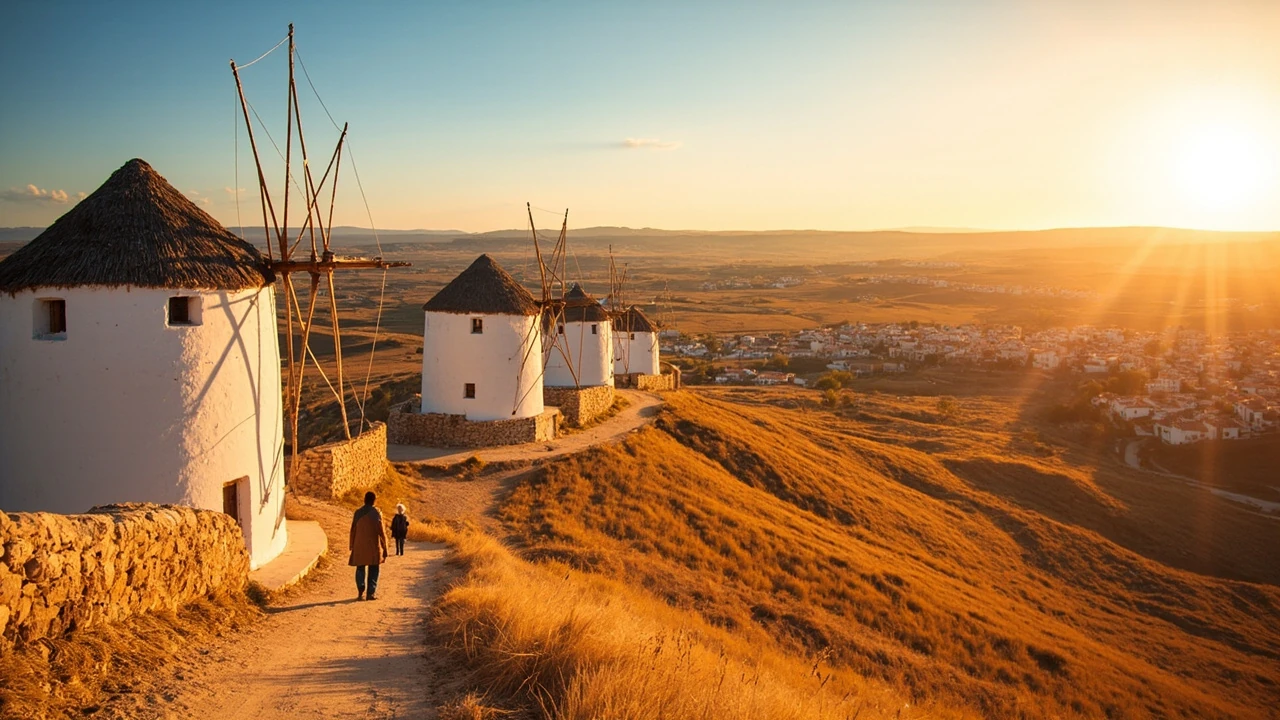
For many itineraries, Consuegra provides the image travelers expect from Castilla La Mancha: white windmills standing across an open agricultural landscape. The castle and mills can be visited together, but the experience works best when you spend enough time to look across the plain rather than immediately returning to the car.
How to build a route without exhausting yourself
A useful route is based on geographic clusters. Group nearby destinations, identify the longest day, and leave room around it. These three approaches work for different schedules.
One day in Toledo
One day is possible if you focus on the old city and accept that you cannot fully absorb every museum. Begin with the major religious and historic complex, walk through the Jewish quarter area, and use viewpoints and lanes for orientation rather than trying to cross the city repeatedly. Reserve time for a meal within the historic center or nearby. The exact opening schedules and access conditions can change, so check current information for the institutions and sites you plan to visit.
This format is best for a first visit to central Spain, especially for travelers based in Madrid. It does not expose the wider landscape, which is why an overnight adds more depth than rushing through a second distant city.
A Toledo and southern loop
For three to five days, a loop through Toledo, Ciudad Real, Consuegra, and Almagro makes sense by car. Toledo provides the major historical stop. From there, the route continues through the plains toward Ciudad Real. Consuegra adds the windmill and castle landscape, while Almagro offers a compact place to slow down, walk, and eat.
Possible additions include Oropesa for another hilltop castle, the mining landscapes near Almadén, or rural routes through the Campo de Calatrava. These are not interchangeable photo stops. Choose a small number based on your interest in castles, industrial history, landscape, or local food.
A northern and eastern route
Travelers interested in mountain scenery can place Guadalajara and Cuenca on the same longer itinerary, though the drives between destinations still take time. Guadalajara offers a useful historical counterpoint to Toledo, while Cuenca connects the trip to the higher eastern landscapes. The best approach is to alternate city time with rural excursions rather than treating both as brief sightseeing stops.
How much time is enough?
| Available time | Realistic plan | What to leave out |
|---|---|---|
| One day | Choose Toledo or Cuenca, not both | Avoid ambitious multi-city driving |
| Two days | One major city plus a local evening or a well-placed second stop | Do not cross the region for a brief photo stop |
| Three or four days | A focused southern route or one city with a nearby landscape excursion | Skip lesser-known towns until the core route works |
| Five days or more | Combine Toledo, southern landmarks, and one smaller historic town | Allow rest time rather than filling every day |
When calculating travel time, use the actual road or rail booking tool rather than relying on a straight-line map. Include time to park, find the correct entrance, and walk to the historic center. On a rural route, a ten-minute delay can turn an ambitious connection into an unnecessary stress point.
What to do in Toledo beyond the headline sights
Toledo’s famous monuments can consume an entire visit, yet the city becomes more rewarding when you leave room for quieter streets and ordinary residential quarters. The most productive approach is to learn the city’s layout before deciding what else to see.
The old city developed around a raised rocky landscape near the Tagus River. This explains both its defensive position and the physical demands of sightseeing. Major sites sit at different elevations, and the streets may look close on a map while requiring a long climb. A simple plan helps: identify two major complexes for the morning, take a midday break, and use the afternoon for walking routes, viewpoints, or a museum.
The city’s major religious collections can overwhelm a short visit if you attempt to see everything. Rather than racing between doors, choose the collections that match your interests and leave time to understand the individual site. For travelers who prefer broad context over a checklist, a guided walking tour can also clarify the relationship among the Christian, Jewish, and Muslim periods that shaped the city.
Look beyond the busiest squares for the details that explain Toledo’s continuity: narrow lanes, repaired walls, unexpected courtyards, craft workshops, and views back toward the surrounding plateau. These are not separate attractions so much as part of the experience of moving through the historic center.
For food, eat where you can also observe the quality of the daily surroundings. A terrace may be pleasant in mild weather, while a traditional dining room can be more practical in summer heat. Keep at least one meal flexible so that a long walk or an unexpectedly busy site does not force a rushed reservation.
Toledo also works well as a final stop if you want to depart through Madrid after several days inland. It is a place with enough atmosphere to justify a complete day, but travelers using it purely as a transport hub rarely see why the city attracts so much attention.
The smaller towns and landscapes
For additional context, Outside the main cities, Castilla La Mancha becomes a landscape of agricultural plains, dry river valleys, wooded hills, and fortified settlements. The change in scale can be striking. A morning among busy city streets may give way to an afternoon of wheat fields, low stone walls, and villages that appear almost unchanged from a distance.
Consuegra is the easiest place for many visitors to understand the region’s visual identity. Its castle and restored windmills occupy a ridge with broad views across the surrounding plain. The Don Quijote association adds literary interest, especially for readers who have encountered the character through translations. The landscape is the main attraction, so allow time beyond the entrance and castle.
Cuenca combines a historic elevated settlement with an even more dramatic natural setting. The old center’s streets and bridges sit within a landscape of cliffs and winding river valleys. Visitors with limited mobility should investigate the terrain carefully, since the famous viewpoints and historic lanes may involve steep approaches.
Almagro rewards travelers who like small-town Spain. Its preserved center contains a notable ensemble of historic buildings, arcaded streets, and spaces that remain closely connected to daily life. A few hours are enough for the center, but an overnight lets you experience the town after day visitors leave.
Guadalajara is often treated as a gateway because it sits north of Madrid, but it has enough history and architecture to merit a stop. The city is useful as a base for travelers who want to explore the northern province and connect later with eastern Castilla La Mancha.
The region’s archaeological sites require another kind of planning. Some are excellent for families or travelers with limited mobility; others involve uneven paths, exposed locations, or seasonal conditions. The painted caves near Valencia de Don Juan are a notable cultural stop, but they are not interchangeable with the open-air windmill landscapes of Consuegra. Select one type of experience instead of expecting a quick visit to satisfy both interests.
Food, wine, and choosing a restaurant
Castilla La Mancha has a strong food identity, but “regional cuisine” is not a single menu repeated unchanged in every town. The landscape and local production methods shape what you are likely to encounter. A practical strategy is to begin with one recognizable regional dish, then explore smaller plates and seasonal produce.
| Food or drink | What to expect | How to order it |
|---|---|---|
| Manchego cheese | A firm sheep’s-milk cheese with a distinctive flavor and texture | Ask whether it is from La Mancha before ordering it as a tasting cheese |
| Tapas and shared plates | Small portions designed for sampling several flavors | Choose based on daily specials and the server’s recommendations |
| Local cured products | Meat and other regional products reflecting inland farming traditions | Look for clear labeling and ask about local provenance |
| Wine from the surrounding country | Several wine areas and styles connected to the region’s dry climate | Ask for a regional selection or a producer rather than ordering by grape alone |
| Typical desserts and pastries | Sweet traditions that vary by town | Order one for the table after a substantial meal rather than choosing it first |
Menus and serving customs differ between a tavern, a tourist-focused restaurant, and a formal dining room. Some establishments offer set menus; others focus on tapas or a la carte ordering. If you have dietary restrictions, communicate them clearly when booking and again when ordering. Ingredient names and preparation methods may be more complicated than the English-language menu suggests.
Market days can be excellent opportunities to see regional products, but they also make towns busiest. If the purpose is to buy food for a picnic or journey, check local market information and travel guidance in advance. Do not assume that every specialty is available year-round or that a stall will remain open between scheduled market hours.
Wine deserves its own consideration. The region includes well-known wine areas, and a guided tasting can add context to the agricultural landscape. Choose a producer or association with clear information about the grapes, production method, and region. Avoid trying to compare every label in a restaurant; fewer, well-explained tastings are more useful.
Food is one of the easiest ways to make a stop in Castilla La Mancha feel less like a tour stop. Plan one substantial meal at a destination rather than eating quickly between attractions. A long lunch can accommodate regional travel without wasting another day.
Getting around, staying overnight, and planning around the heat
Transport choices determine how much of the region you can see. The fastest-looking option on a map may not be the most practical once you include a transfer, a station-to-hotel walk, and a late return.
- Rail: Useful for connecting major population centers, particularly when arriving from Madrid. It is less convenient for isolated villages and some of the most scenic rural stops.
- Car: Best for freedom across the plains and for linking Toledo, Ciudad Real, Consuegra, and smaller towns. It also creates parking and navigation responsibilities in historic centers.
- Organized day trip: Efficient when time is limited and the main destination has substantial independent value. Less attractive for multi-town routes or travelers who want freedom to linger.
- Private transfer: Useful for early connections, a group with bulky luggage, or a door-to-door segment between two bases.
Historic centers often restrict vehicle access, and a navigation pin may stop at a perimeter rather than the actual site. Confirm parking arrangements before arriving. In Toledo and Cuenca, travelers with heavy luggage or limited mobility should decide in advance whether to use a taxi, prearranged transfer, or a drop-off point closer to the center.
Hotels in the larger cities fill during weekends, festivals, holidays, and major cultural events. If your itinerary depends on a specific property, book it before relying on less central accommodation. Staying outside the historic center can improve availability and parking access, but it may also add a daily commute and reduce the pleasure of returning to the old town at night.
Summer deserves careful planning. Inland temperatures can make exposed landscapes and historic stone surfaces uncomfortable by midday. Schedule strenuous walks for the morning, use a longer meal or rest period around the hottest part of the day, and carry water. A hat and sunscreen are more useful here than a generic city break kit. Check local heat warnings before driving through rural areas.
Winter conditions can include cold, fog, rain, and occasional snow in higher areas. Rural paths may close, and daylight is shorter. If the trip depends on walking or an outdoor site, confirm its current status and access conditions. If your priority is major museums, architecture, and food, winter can still be rewarding with a smaller number of stops.
What travelers commonly misunderstand
The first misconception is that Castilla La Mancha is simply the landscape associated with Don Quijote. The literary connection is real, but the region also has layered Roman, Islamic, Christian, agricultural, and industrial histories. The second is that every stop can be reached easily from Madrid. Distances within an inland region may look modest until you add roads, transfers, and limited local transport.
Another common error is planning around one dramatic attraction while expecting good food and scenery to appear automatically. The strongest days pair a place with enough time to understand its setting. A windmill complex benefits from an open landscape; a cathedral complex benefits from a slow interior visit; a mountain town benefits from a walk beyond its main lane.
Do not assume that a rural stop provides the same services as a city. Fuel, food, toilets, mobile service, and medical assistance can be less immediate outside major centers. Keep the car fueled, carry water, download maps for offline use, and research the next sensible service point on longer routes.
Visitors sometimes worry that Castilla La Mancha lacks the density of famous destinations such as Andalusia or the Basque Country. That comparison misses the point. This is a region best experienced through deliberate selection: one great historic city, one smaller town, one landscape excursion, and enough time for the regional table. Trying to reproduce a highlights checklist from a much larger destination is the surest way to spend a lot of time in a car.
If you are extending a Spanish itinerary, compare the style of the trip rather than simply adding another city. Travelers interested in Spain’s northern architecture may also enjoy the independent character of Burgos, the Spanish city many travelers almost skip. Those building a broader historical narrative can place the region alongside material in the history of France, since medieval and early modern connections across the Iberian Peninsula and France shaped the broader setting.
Before departure, use this final checklist:
- Choose Toledo, Cuenca, or a rural route as the main focus.
- Group stops by geography and avoid two ambitious long-distance days in succession.
- Confirm current opening schedules and seasonal access for every major site.
- Reserve cars, trains, and central hotels before regional transport becomes constrained.
- Build one relaxed meal and one unstructured walk into every full day.
- Pack for strong sun, cool evenings, and long walking surfaces.
- Keep a second option for each rural excursion in case wind, heat, or maintenance changes the plan.
With those decisions made in advance, Castilla La Mancha rewards travelers who look beyond a checklist. Toledo supplies history and density, Cuenca supplies drama, and the smaller settlements reveal the agricultural and architectural character that gives the region its identity.
Frequently asked questions
What is the best place to visit in Castilla La Mancha for a first trip?
Toledo is usually the strongest choice for a first visit because it brings major architecture, historic quarters, museums, and scenic viewpoints together in one city. Cuenca is the leading alternative for travelers who prioritize landscape and walking. If you have only one day, choose one of those rather than attempting to cover both.
How many days do you need to visit Castilla La Mancha?
Two days are enough for one major city with a nearby stop. Three or four days allow a more satisfying combination of Toledo, Ciudad Real, Consuegra, and a smaller historic town. A week or more supports slower travel and access to the wider landscapes of Cuenca or Guadalajara.
Is Toledo worth visiting from Madrid for one day?
Yes, provided you focus on the major sights and do not expect to see everything. Toledo rewards a carefully planned day, but it is a large historic center with steep streets. If time is extremely limited or you have limited mobility, choosing a smaller set of priorities will be more comfortable.
Is Castilla La Mancha suitable for a family road trip?
It can be. Combine a city visit with a manageable rural route, stop for meals and playground or rest breaks, and avoid making the children ride through long distances without a proper pause. Windmill landscapes and selected museums may engage younger travelers more than a schedule built around distant monuments.
What is the best time of year to visit Castilla La Mancha?
Spring and autumn generally offer comfortable conditions for walking, villages, and rural drives. Summer is possible but requires attention to midday heat, while winter suits travelers focused on museums and indoor cultural experiences but may limit some mountain or rural access. Check current conditions for the specific sites and routes you plan to use.
Do I need a car to travel around Castilla La Mancha?
A car is the most flexible option for seeing the smaller towns, windmills, and rural landscapes. Rail is convenient for major centers but cannot replace a car for many regional excursions. If you do not drive, base yourself in one or two cities and use scheduled transport or guided day trips for selected destinations.
What food should I try in Castilla La Mancha?
Start with regional tapas or shared plates, local cured products, Manchego cheese where its origin is clear, and a wine from the surrounding region. A long lunch in a smaller town can be one of the most rewarding parts of the visit. Ask about seasonal dishes and dietary needs when ordering.
Are the windmills near Consuegra worth visiting?
They are worth including for anyone visiting southern Castilla La Mancha, particularly because the mills and hilltop castle stand in an open landscape that explains the region’s familiar image. Consuegra works best as part of a route through Ciudad Real and nearby towns rather than as an isolated, rushed stop.
Are the windmills and their heritage protected?
Select historic mills are recognized for their role in the region’s traditional water-management and agricultural heritage. The For additional context, UNESCO windmill heritage listing provides authoritative background on the surviving structures and their broader significance. Visiting procedures and site access can change, so confirm current information before travel.
Can Castilla La Mancha be visited without a car?
Yes, but the trip works best as a combination of rail travel and guided excursions. Toledo, Cuenca, and other larger centers can anchor the visit. Smaller villages and remote landscapes are much less convenient without a car, so ask about current public transport before committing to a route that depends on spontaneous local connections.


Leave a Reply