
Argentina landmark planning starts with the right region
Choosing the wrong Argentina landmark can mean spending a short vacation in a transport hub, crossing an enormous country for one viewpoint, or choosing a destination whose weather and terrain do not suit the trip. Argentina stretches from subtropical forests in the north to glaciers and mountains in the south, and the distance between its major sights is measured in hours of flight, winding roads, or overnight trains. A useful plan starts by matching the kind of place you want to experience with the region that delivers it.
The best-known attractions divide into three broad groups. Buenos Aires offers dense urban architecture, museums, performance, and historic public spaces. The northeast and northwest emphasize waterfalls, colorful mountain settlements, deserts, and archaeological sites. Patagonia is built around glaciers, granite massifs, steppe, and long drives through sparsely populated scenery. A single trip can combine two regions, but choosing three or four usually leaves too little time for the places themselves.
This guide compares widely recognized Argentina landmarks by setting, travel demands, and the kind of experience they offer. It does not attempt to rank them with artificial scores. A landmark that is excellent for one traveler may be disappointing for another. The practical question is whether its place, pace, access requirements, and physical demands fit your itinerary.
- Best for a first short visit: Buenos Aires, where major cultural attractions and neighborhoods can be reached without a long domestic flight.
- Best for a dramatic natural highlight: Iguazu Falls, with the important choice of which Argentine side and supporting activities to use.
- Best for scenery and road-trip atmosphere: Patagonia, especially if you can spend several days rather than treating the distance as a sightseeing stop.
- Best for history and strong visual character: Salta and the Quebrada de Humahuaca, with additional time needed for high-altitude destinations farther north.
Before comparing individual sites, decide how much of the trip should be devoted to structured sightseeing. Travelers who want famous monuments and museums usually benefit from a city-based stay. Those who value scenery, hiking, and fewer formal schedules may prefer national parks and small towns. Families, solo travelers, and travelers with limited mobility also need different compromises, especially when elevation, long transfers, and uneven walking surfaces enter the picture.
How to narrow the country’s major landmarks by region
Geography is the first filter because it determines travel time and the cost of moving between attractions. It also helps prevent an itinerary that looks ambitious on paper but leaves no room for delays, weather changes, or an unplanned afternoon in a place you may want to explore more deeply.
| Region | Strongest landmarks | Best trip style | Main planning consideration |
|---|---|---|---|
| Buenos Aires and the Río de la Plata | Recoleta, the historic center, Teatro Colón, San Telmo, and the port area | City break with museums, food, architecture, and evening events | Allow time to move across the city and choose neighborhoods rather than racing between distant sights |
| Misiones and the Atlantic side of the northeast | Iguazu Falls and nearby forest and river landscapes | Short nature-focused trip with a major waterfall highlight | Choose the falls-side base and activities carefully; add travel time for the airport transfer |
| Northern Salta and Jujuy | Salta, Cafayate, Quebrada de Humahuaca, and high mountain settlements | Cultural road trip with colorful towns, desert scenery, and archaeological history | Longer road distances and altitude require extra planning |
| Santa Cruz and southern Patagonia | Perito Moreno Glacier, Los Glaciares, and El Chaltén | Scenery-led trip with hikes, viewpoints, and remote landscapes | Allow several days in the region and account for variable conditions |
| Neuquén and Río Negro | San Martín de los Andes, Lanín, Limay, Nahuel Huapi, and the wider lake district | Outdoors itinerary combining lakes, forests, hot springs, and mountain towns | Distances are larger than they appear on a map; avoid changing bases too often |
A common mistake is treating every major stop as a separate day trip from the same base. Argentina’s geography rewards a simpler structure: one city stay, one nature-focused stay, and enough travel time between them. If your trip is shorter than two weeks, choose no more than two major regions. Three can work for travelers already familiar with long transfers, but it usually means sacrificing depth at each stop.
Season matters, but it should shape the itinerary rather than determine it automatically. The north has a different seasonal rhythm from Patagonia. The far south can be weather-dependent even when conditions elsewhere are pleasant. Rather than promising one ideal month for the entire country, build in flexibility and place the destinations whose conditions best match your travel dates at the center of the trip.
Accommodation location is another regional decision. In Buenos Aires, central neighborhoods reduce travel time but may not fit every budget. At Iguazu Falls, the local community and Puerto Iguazu offer different experiences from staying inside the park area. In Patagonia, a mountain lodge may offer scenery and quiet but require more driving. Choose the base for the experience you want after leaving the attraction, not only for the shortest possible visit.
Buenos Aires landmarks: choose a city route, not a checklist
Buenos Aires is the easiest major region to combine with an international arrival. It is also easy to fill with activity. The Recoleta district combines notable architecture, a major cemetery, and a busy commercial setting. The historic center brings together government buildings, public squares, a cathedral, and major cultural institutions. San Telmo is associated with historic houses, cobbled streets, markets, and a strong sense of neighborhood life. These places overlap, but treating them as unrelated stops leads to unnecessary backtracking.
One efficient approach is to organize the city around central areas and then add a dedicated day for the wider neighborhoods. Recoleta, downtown Buenos Aires, and the southern historic districts can fill a rich day, but trying to fit all of them into a morning creates a tour rather than a visit. The Teatro Colón and other performance venues can anchor an evening, although availability and schedules should be checked for the specific date.
| Buenos Aires area | What visitors can experience | Best planning approach |
|---|---|---|
| Recoleta | Notable architecture, the cemetery complex, museums, and a polished central district | Pair with nearby central Buenos Aires and reserve time for a slower architectural walk |
| Centro and San Telmo | National institutions, plazas, historic streets, markets, and varied architecture | Use one walking route, then add another district rather than repeating the same center |
| Palermo | Parks, residential streets, markets, dining, and modern neighborhood life | Choose a specific neighborhood and interest rather than treating Palermo as one stop |
| La Boca and San Telmo | Colorful streets, port history, tango culture, and historic residential areas | Visit with attention to residential character and respect for the people who live there |
| Costanera Sur | River views, green space, and a more open setting near the city center | Add it to a central day for a change of pace, especially in mild weather |
Buenos Aires also works well as the beginning or end of a larger trip. It provides more transport connections than smaller regional cities and gives travelers a comfortable buffer before a long flight. However, placing it at both ends can weaken the journey if the same neighborhoods are repeated. A better arrangement is to use the city as the entry point, move south for nature, and return for only one or two final days.
For travelers interested in national memory rather than architecture alone, Buenos Aires provides museums, courts, public spaces, and commemorative sites connected to Argentina’s dictatorship era. For a documented account of the multinational human-rights prosecutions associated with Operation Condor, the BBC report on the historic human-rights proceedings provides useful context. It should be read as historical reporting rather than a substitute for a planned museum visit or a current court record.
The city works best for travelers who can tolerate a little disorder around their plans. Demonstrations, transit changes, weather, and crowded districts can affect the practical flow of a day. Leave room between reservations, carry the local currency or use a reliable payment method suited to your needs, and avoid an itinerary so exact that one delayed train forces a chain of rushed transfers.
Iguazu Falls and the northeast: plan the falls properly
Iguazu Falls is the strongest natural landmark for travelers seeking a single dramatic reason to travel to northeastern Argentina. The waterfalls sit within a protected landscape of forest, river, and trails, and the experience extends beyond a single viewpoint. The Argentine side provides access to the upper and lower circuits, while nearby activities can introduce the surrounding region and the ecosystems connected to the falls.
The key decision is where to stay. Puerto Iguazu is a full town with restaurants, services, and varied accommodation. Visitors who stay within the national park area wake close to the falls and can reach them early, but their daily options are narrower and prices may reflect the convenience. Many travelers combine a Puerto Iguazu stay with a shorter park stay, although this requires more luggage movement and a closer look at available services.
- Choose the Argentine side for direct access to the main waterfall circuits. Plan time for the trails rather than treating the visit as a brief stop beside the overlook.
- Check the selected circuit when building the day. A closed or restricted route changes the pace and should influence how much time you reserve.
- Decide whether wildlife and boat activities are part of the goal. These provide a different perspective but require additional reservations and suitable conditions.
- Protect the forest experience. Staying on marked paths and following local guidance matters because the attraction is also a delicate natural environment.
- Do not pack every regional highlight into one short visit. The falls deserve more time than a photo stop; other northeast destinations need additional travel days.
The northeast can include other destinations with strong identities, including the red cliffs of the Jesuit missions around Santa Cruz and the subtropical landscapes of Misiones. These places make sense for travelers with time to understand how the region differs from Buenos Aires and Patagonia. Trying to combine them with Iguazu in one rushed schedule can make every stop feel abbreviated.
Weather and river conditions can affect the full experience. Mist, heavy rain, or high water may alter which views are available, although the falls remain a large and impressive landscape under many conditions. Bring clothing for a wet microclimate rather than treating the forest as similar to a city park. Comfortable footwear also matters because the paths include walking, stairs, and irregular surfaces.
For a one-week international trip, Buenos Aires plus Iguazu is a practical combination. Spend the first part of the week in the capital, then move to the northeast for a focused nature segment. If Patagonia is the priority, omit Iguazu rather than using the falls as a quick comparison stop. The waterfalls deserve better than a rushed detour, and the country’s southern scenery cannot be meaningfully sampled at the same time.
Patagonia landmarks: distance is part of the attraction
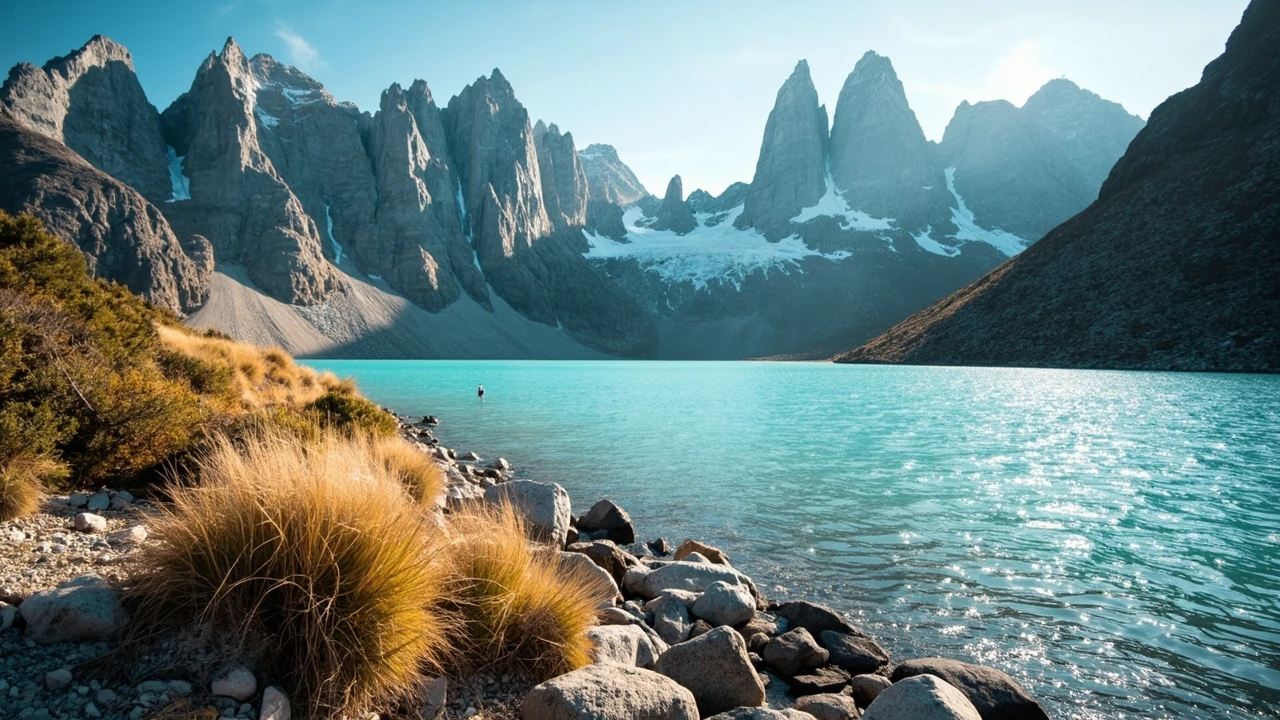
Patagonia is not a single compact destination. It spans distant provinces, enormous national parks, dry steppe, glaciers, granite peaks, fjords, and settlements separated by long roads. A useful landmark trip here is organized around a chosen region. The Los Glaciares area offers Perito Moreno Glacier, viewpoints, and access to El Chaltén, while the lake district around Bariloche has a different combination of water, forest, mountains, and outdoor activities.
| Patagonia option | Main appeal | Who will enjoy it most | Time to allow |
|---|---|---|---|
| Perito Moreno Glacier and Los Glaciares | Glacier viewing, dramatic peaks, and the mountain town of El Chaltén | Travelers who want expansive scenery and are comfortable with substantial transfers | Several days rather than a day trip |
| El Chaltén | Trail access, mountain views, and a strong trekking atmosphere | Hikers and travelers who want a town base for outdoor days | Two nights or more for a balanced visit |
| San Martín de los Andes | A beautiful mountain setting near lakes and the Lanín area | Travelers combining gentle scenery with hiking or outdoor excursions | At least two nights when paired with other stops |
| Bariloche and Nahuel Huapi | Lake scenery, wooded hills, food, and a range of organized activities | First-time Patagonia visitors and travelers who prefer a base with services | Two to four nights depending on the itinerary |
| Southern routes toward El Calafate | Rugged steppe, distant views, and changing landscapes along long drives | Road-trip travelers who value the journey itself | Multiple driving days with overnight stops |
Perito Moreno Glacier is often approached as the essential Patagonia landmark. It is an enormous, active ice front, but the visitor experience depends on scale and access. The boardwalk system and viewpoints allow close observation of ice, while other parts of the park present a broader picture of the Southern Patagonian Ice Field. Weather can determine how much detail is visible, so it is wise to remain in the area long enough to try more than one visit if the schedule permits.
El Chaltén works well as a base for travelers with relatively independent plans. The town offers lodging, restaurants, guide services, and access to trails of different lengths beneath the surrounding peaks. Because trails can be long and exposed, a fit, prepared visitor may get much more from the area than someone expecting only a viewpoint stop. Plan layers, water, navigation, and turnaround decisions in advance.
Driving farther south changes the emphasis from planted and mountain landscapes to open steppe. Long distances become part of the experience, and much of the appeal lies in changing light, vast horizons, and sparse traffic. At the same time, fuel, vehicle preparation, weather, and limited services require attention. These routes are best for travelers who have chosen a road trip rather than for someone trying to collect distant sights with minimal driving.
Patagonia rewards commitment. Three nights in one coherent area usually produce a better trip than six nights divided among bases separated by long drives. If a traveler can spare only two nights, choosing either the glacier area or El Chaltén is more realistic than trying to combine both with the lake district and distant southern routes.
Northwestern Argentina landmarks: color, altitude, and road time
Salta and Jujuy offer one of the clearest visual contrasts in Argentina. The city of Salta has a central area lined with historic buildings, steep hills, and a warm, relaxed atmosphere. Cafayate provides access to red-rock country and high-altitude vineyards. Farther north, the Quebrada de Humahuaca changes into a series of ocher, red, and violet landscapes, with towns and archaeological sites placed among the mountains.
Road travel is central to the experience. The journey from Salta toward the Quebrada is easy to appreciate, but distances measured in kilometers do not convey the number of curves, settlements, or pauses that may shape the day. A series of short stops is usually better than one long push to the end of the route. Overnight stops can make the landscape progression feel more intentional and reduce the temptation to rush.
- First stop: Salta. Use the city to explore its historic center, local food, and nearby scenery without treating every attraction as a day trip.
- Second stop: Cafayate and its surrounding valleys. This area suits travelers interested in desert colors, vineyards, and a slower rural rhythm.
- Third stop: the Quebrada de Humahuaca. Move north slowly enough to understand how the landscape changes from one valley to the next.
- Optional extension: high-altitude places farther north. These require additional time, careful acclimatization, and realistic expectations about transport and weather.
Elevation is the issue travelers most often underestimate. Salta is lower than the communities farther along the Quebrada, and movement toward those areas can produce headaches, fatigue, or other signs of altitude illness. Spending time in Salta before continuing north can help. Travelers with relevant medical conditions should seek individualized advice from a qualified clinician before traveling at altitude.
Archaeological sites such as the hilltop ruins near Tilcara add historical depth, but they require time and interpretation. Standing at a site without context can feel like viewing a collection of stone shapes; a guide or a well-chosen museum visit can clarify settlement, landscape, and cultural history. The experience becomes more meaningful when visitors recognize that these places are connected to living communities and broader regional traditions, not isolated photo backdrops.
The northwest pairs especially well with Iguazu because both can be reached through the northern part of the country, though the travel time still deserves careful planning. Buenos Aires plus the northwest is another strong pairing, with the capital serving as an arrival point before the scenic road journey. Patagonia is better kept separate unless the traveler has a deliberately demanding schedule.
How to compare an Argentina landmark by access, effort, and payoff
Once the shortlist is narrow, compare each place with the same set of questions. Distance from the nearest base, the amount of walking, dependence on weather, available activities, and the value of the surrounding area matter more than a generic “must-see” label. The strongest landmark is the one that rewards the time available and matches your preferred pace.
| Decision factor | Questions to ask | How it changes the plan |
|---|---|---|
| Time required | Can the place be understood in a short visit, or does it need an overnight stay? | Protect enough time to avoid turning a complex destination into a photo stop |
| Transfer burden | Does the journey require a flight, long drive, trail transfer, or several transfers? | Count travel as part of the experience and pair nearby stops intelligently |
| Physical demand | Are stairs, uneven paths, steep trails, altitude, or heat involved? | Choose alternatives and build in recovery time |
| Weather sensitivity | Can poor conditions close a viewpoint, reduce visibility, or change the route? | Leave a second opportunity when possible |
| Supporting area | Is the surrounding town also worthwhile, or is it purely a departure point? | Consider staying nearby for an evening rather than rushing onward |
| Personal interest | Do architecture, history, wildlife, hiking, food, or photography motivate the visit? | Use personal interest to break ties between similar destinations |
Travelers who enjoy comparing national parks can also find value in Costa Rica landmarks and why nature shapes the experience. The country itself offers a useful contrast: Argentina combines monumental natural scenery with a major European-style city and a strong historic identity. Reading about another destination should not determine the itinerary, but it can clarify whether you want a landscape-led trip or one with more cultural and urban variety.
Architecture and history provide another useful comparison. A city such as Burgos demonstrates how old buildings fit into the daily life of a place rather than standing apart as isolated monuments. That distinction matters in Buenos Aires, where a landmark can be a cathedral, a preserved mansion, a neighborhood, or an ordinary historic street. Seeing the city as a collection of lived environments is often more rewarding than identifying a single must-see structure.
Do not let the number of photographs influence the decision. Some landmarks photograph dramatically while offering limited depth. Others reveal themselves gradually through walking, observation, or local routines. A destination that supports several kinds of activity may be more valuable than a visually spectacular place that can only be experienced from one fenced viewpoint.
Build a practical itinerary without wasting the journey
The most successful Argentina landmark itinerary has a clear priority and a flexible frame. Choose the one destination that would justify the entire trip, give it the most reliable weather window, and place it near the middle of the route. Add one complementary region with a different character. Then use remaining nights for cities, transport, and recovery rather than filling every date with distant targets.
A balanced two-week pattern might begin in Buenos Aires, continue toward the northwest, and finish with Iguazu. A different version uses Buenos Aires for the first and final portions of a Patagonia-focused journey. The exact sequence is less important than avoiding excessive base changes. For shorter trips, choose one region and stay there.
- Before booking: Decide which two experiences matter most, list acceptable long transfers, and identify the trip’s least flexible day.
- While routing: Keep domestic travel times on the same itinerary map as sightseeing time; they consume the same 24-hour day.
- When adding stops: Look for places on the route rather than destinations that create a major detour.
- For weather-sensitive places: Leave room for a second visit or a nearby alternative.
- Before the trip ends: Reserve enough time to reach the international departure point without an overconfident connection.
Pack by region rather than by list. Buenos Aires calls for ordinary city clothing, comfortable walking shoes, and a layer for cool evenings. Patagonia requires more protection from wind, rain, and rapidly changing conditions. The northwest needs sun protection, water, and clothing suited to strong sun and significant temperature differences. Iguazu benefits from a rain layer and footwear that handles wet, uneven trails.
Responsible planning also includes understanding local rules at protected areas and cultural sites. Stay on designated paths, avoid handling archaeological material, respect restrictions around wildlife, and follow guidance in communities where the landscape is also someone’s home. These practices protect the places that make the trip worthwhile.
For broader context on how a country’s visible identity can differ from its capital, the site’s article on the history of France before Paris offers a useful comparison. It reinforces a principle that applies throughout Argentina: major landmarks belong to a larger sequence of regional settlement, political history, migration, and everyday life rather than existing apart from it.
Frequently asked questions
What is the best-known Argentina landmark for a first visit?
For a short first trip, Buenos Aires is usually the easiest major region to combine with an international flight. It offers historic districts, museums, architecture, performance, and a broad range of dining and neighborhood experiences. Iguazu Falls is the strongest alternative when the traveler wants one dramatic natural highlight. Patagonia rewards travelers who can devote more time to long transfers and remote scenery.
Which Argentina landmark is best for families?
There is no single winner because the right choice depends on the children’s ages and interests. Buenos Aires is easier for short outings, varied meals, and indoor museums. Iguazu can engage older children with the scale of the falls and forest trails, though the walking and weather require preparation. Patagonia may suit active families but asks more of children on long drives and uneven trails. Start with the interests of the whole group rather than selecting the most photographed place.
How many days should I spend at Iguazu Falls?
One full day is a reasonable minimum for the principal circuits and viewpoints, and two days provide a more relaxed experience. Staying near the falls can make an early or repeated visit easier. Puerto Iguazu offers a broader range of accommodation and services, while the park area places the visitor closer to the landscape. Check current trail and activity conditions before finalizing the number of days.
Can I visit Patagonia and the Iguazu Falls in one trip?
Yes, but only with a long and demanding itinerary. Patagonia and Iguazu are separated by a substantial portion of the country, and a direct connection can consume a full travel day. Travelers with two or three weeks can build a sequence, but those with less time should choose one region. Attempting both along with Buenos Aires can produce a trip defined by transport rather than sightseeing.
Is the Perito Moreno Glacier the only Patagonia landmark worth seeing?
No. Perito Moreno is the best-known glacier, but Patagonia also includes the mountain town of El Chaltén, the lake district around Bariloche and Nahuel Huapi, San Martín de los Andes, broad steppe landscapes, and the Southern Patagonian Ice Field. The best base depends on whether you prioritize glacier viewing, hiking, road travel, lakes, or a combination of scenery and outdoor activities.
Are the northern ruins and colorful towns near Salta difficult to visit?
They can be reached by road, but altitude and distance require preparation. Travelers moving north from Salta toward the Quebrada of Humahuaca should allow time to acclimatize, stay hydrated, and adjust activities if symptoms appear. A slower route with overnight stops is usually more rewarding than attempting to cover the entire region in one long day.
What is the best time to visit an Argentina landmark?
The answer depends on the region. Patagonia and the far south have their own seasonal and weather patterns, while northern destinations and Buenos Aires differ again. Rather than searching for one universally ideal month, check the conditions relevant to the specific route and place the most weather-sensitive activities where you can allow a backup option. Flexibility often matters more than a perfect date.
Should an Argentina landmark trip use domestic flights or long-distance buses?
Domestic flights can save time between distant regions, but they add airport transfers and require careful planning around baggage, arrival times, and possible delays. Buses may offer a more scenic journey and can work well on established routes, yet they consume more hours. The right choice depends on the distance, the quality of the road or air connection, and whether arriving fresh is more valuable than seeing the landscape in transit.
How do I avoid making every stop feel rushed?
Limit the itinerary to two major regions, give each one a clear minimum stay, and avoid adding a distant landmark simply because it appears on a list. Place one flexible period in the schedule and use it for a second visit, weather recovery, or a slower day in a town. Remember that transfers, meals, check-in, and short local journeys all consume time even when they are not listed as sightseeing activities.

Leave a Reply