

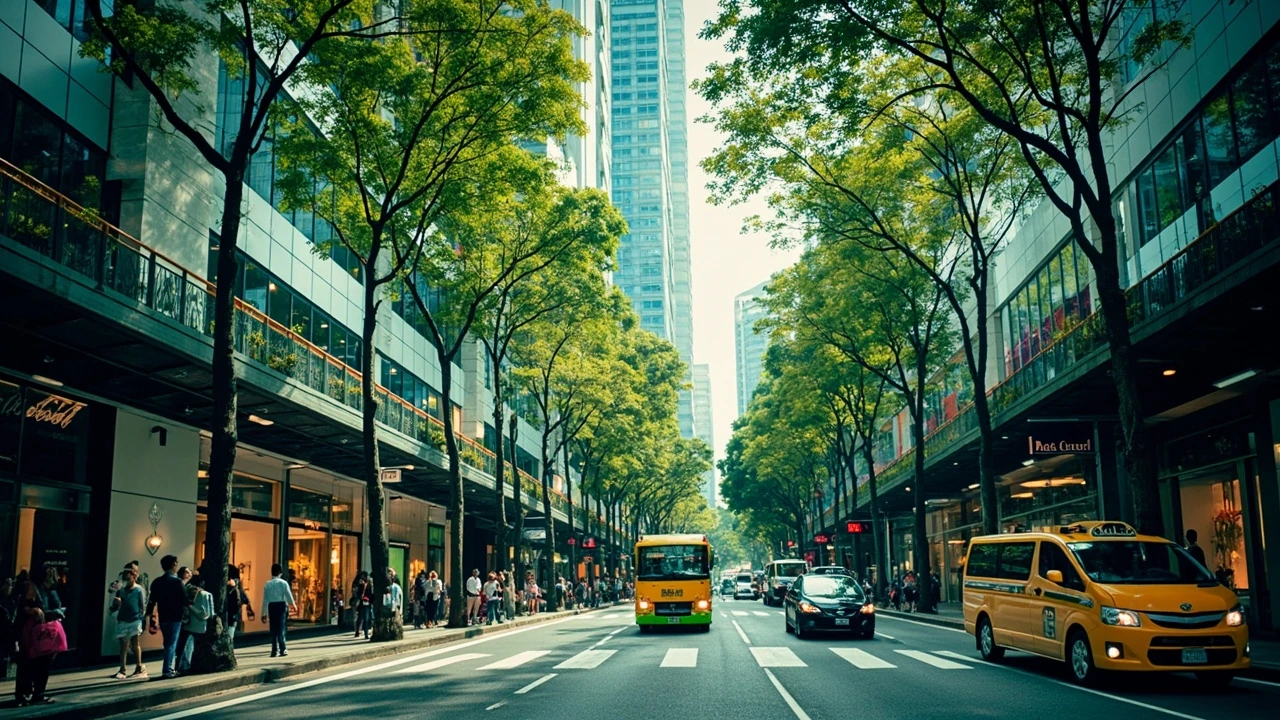
Orchard Road: a practical guide to Singapore’s retail district
A first visit to Orchard Road can feel surprisingly complicated when every arrival point seems to offer a different shopping mall, restaurant cluster, and connection to the MRT. The practical solution is to treat the street as a sequence of neighborhoods rather than one long block: begin near the station that suits your itinerary, group similar stops together, and use the underground walkways when weather or traffic makes a street crossing inconvenient.
Orchard Road is Singapore’s best-known shopping and dining corridor. It runs through the city’s Central Area and passes several major transit stations, including Orchard, Somerset, and Dhoby Ghaut. The route is especially convenient for travelers who want department stores, malls, restaurants, hotels, and entertainment within a short walk of one another. It is less suitable for anyone hoping to experience an old-fashioned market, quiet residential lane, or low-key sightseeing day.
This guide covers how Orchard Road fits together, which arrival point makes sense for different itineraries, how to shop without spending the entire day in a single mall, what to expect when getting around, and the details worth checking before departure. The [road’s historical background and route](https://en.wikipedia.org/wiki/Orchard_Road) also explain why its name and modern form differ so sharply from the plantation landscape visitors sometimes imagine.
How Orchard Road is divided into distinct neighborhoods
Orchard Road is approximately 2.5 kilometers long, but its most recognizable shopping stretch is much more compact than that total suggests. Major malls, hotels, restaurants, and stations cluster around a sequence of recognizable junctions. The eastern end connects to Dhoby Ghaut, the center contains Somerset and Orchard stations, and the western approach links with Tanglin and the wider road network.
Think of the route in practical sections. Doing so helps prevent a visit from becoming a chain of long crossings between malls that look close on a map but may involve traffic lights, elevated roads, construction works, or lengthy indoor passages.
| Area or landmark | What visitors will find | Best use during a visit |
|---|---|---|
| Dhoby Ghaut end | Major retail buildings, restaurants, transit connections, and nearby civic and cultural destinations | Beginning an east-to-west shopping route or pairing retail with museums and parks |
| Somerset area | Shopping centers, offices, hotels, eateries, and direct MRT access | A compact stop with both shopping and food options |
| Central Orchard | Dense concentration of flagship stores, malls, restaurants, and busy sidewalks | Priority shopping, department-store browsing, and evening dining |
| Tanglin and western approach | Hotels, the Botanic Gardens side of the district, and routes toward other parts of Singapore | Linking Orchard Road with parks or beginning a longer city circuit |
The Orchard Planning Area also includes subzones beyond the road itself, including Orchard, Somerset, and Tanglin. That distinction matters when reading a map: a business described as being “in Orchard” may be around a station or side street rather than directly on the main thoroughfare.
A useful way to organize the route
- First-timer overview: Start at Orchard station, browse the central mall cluster, eat nearby, and continue toward Somerset.
- Shopping-focused visit: Choose two or three destination buildings and keep each block to a planned time limit.
- Dining-focused visit: Arrive near Somerset or central Orchard, where meals can follow shopping without adding another long transfer.
- Culture and shopping combination: Use Dhoby Ghaut as the starting point for museums and other nearby sights before shopping westward.
This approach works because Orchard Road’s attraction is partly its density. Walking between several major stops can be more rewarding than spending an entire afternoon inside one large complex, especially when a visitor wants to compare architecture, window displays, street activity, and different branches of Singapore’s food scene.
Which Orchard Road arrival point should you choose?
The best arrival point depends less on the distance from your hotel than on the plan you intend to execute. MRT travel is usually the most straightforward choice because major stations serve the road directly, while taxi and private-car trips can be slowed by entry points, one-way routing, and congestion.
| Arrival option | Advantages | Main limitation | Best fit |
|---|---|---|---|
| Orchard MRT | Direct access to the central retail concentration and an easy first impression of the main corridor | Exits and pedestrian routes can feel busy during peak periods | Shoppers spending most of the day in the heart of Orchard Road |
| Somerset MRT | Convenient access to malls, offices, hotels, and dining around the southern end of the main shopping spine | Less useful for visitors whose first stop is at the far eastern end | A shorter shopping day or combined business-and-leisure trip |
| Dhoby Ghaut MRT | Strong interchange access and convenient placement near several major destinations | Foot routes to selected malls may involve longer corridors than the station name suggests | Visitors adding museums, parks, or other central-city stops |
| Orchard Boulevard station | Useful access on the western side of the district | Less convenient for a quick visit centered on the largest malls | Combining the retail district with Tanglin or nearby attractions |
Arrival checklist
- Check the transit route to the station, not only the final station name; Singapore’s rail network can require a change at a busy interchange.
- Choose one side of the road as your initial anchor. Moving in a consistent direction prevents repeated backtracking.
- Confirm which malls or restaurants are on your list before choosing an arrival station.
- If traveling with a child, a mobility device, or a large item, allow extra time for station access and the busiest crossings.
- Download the local transit app used for current journey planning and service information.
Visitors who want a quick orientation can begin at Orchard MRT, walk through the busiest retail area, and end near Somerset or Dhoby Ghaut. Reversing the sequence works just as well. The road is easiest to understand when it is treated as a linear itinerary rather than a single destination with one obvious entrance.
How to shop along Orchard Road without overfilling your day
Orchard Road contains many shopping complexes, from large malls with international brands to smaller centers associated with electronics, specialty goods, food, and neighborhood shopping. The names most likely to appear in visitor discussions include ION Orchard, Wisma Atria, Ngee Ann City, Orchard Central, Orchard Gateway, 313@Somerset, Orchard Plaza, Plaza Singapura, The Centrepoint, The Heeren, Mandarin Gallery, Wheelock Place, and Scotts Square.
The quantity of choices creates a common planning error: treating every large building as a separate half-day outing. A better method is to decide what kind of shopping experience you want before arriving.
| Shopping goal | How to choose among Orchard Road options | Time to allow |
|---|---|---|
| Luxury and flagship stores | Focus on major malls around the central section and prepare to walk between several buildings | Two to four hours |
| Department-store experience | Visit one or two large multi-level stores rather than treating each as a separate attraction | One to three hours |
| Electronics and specialty goods | Compare the relevant centers along the route and check which floors house the category before entering | One to two hours |
| Food-focused shopping | Concentrate on a food cluster and combine it with errands instead of making a dedicated cross-city trip | One to two hours |
Exact mall hours, restaurant availability, and retailer operations can change, so use the official websites for a final check. A current directory can show opening times and categories, but it cannot tell you whether a store has moved floors, closed temporarily, or changed its format. Search by the specific brand and shopping center rather than relying on an old saved pin.
Three habits that make browsing easier
- Set a purchase rule. Decide whether the visit is for a particular item, general browsing, or simply seeing the district.
- Use a single bag. Multiple purchases across several malls make navigation and transit more difficult, especially at peak times.
- Review receipts for tax-refund procedures. Eligibility and processing arrangements depend on the purchase and current rules, so check official information before shopping.
Window displays and architecture can make the street interesting even to people who do not intend to buy anything. The street also shows how Singapore combines commercial development with older references to its landscape: the road’s name came from the nutmeg, pepper, and fruit orchards or plantations once found in the area, rather than from a modern mall.
Where to eat around Orchard Road
Orchard For additional context, Road is surrounded by restaurants, food courts, cafés, and coffeehouses, with options at multiple price points. The challenge is choosing an area rather than searching randomly between stores. Central Orchard favors variety and spontaneous meals, while the Somerset side is convenient for visitors arriving by MRT or combining lunch with nearby hotels and offices.
For a practical meal plan, decide whether you want a quick food-court stop, a longer restaurant meal, or a drink between shopping blocks. These choices call for different amounts of time and produce very different itineraries.
| Meal type | How to plan it | Best time |
|---|---|---|
| Quick food-court lunch | Choose a destination near your shopping route and allow time for the queue and finding a seat | Before the lunch peak where possible |
| Restaurant meal | Make a reservation when the venue is popular, especially for dinner or a weekend | Off-peak lunch or an early evening seating |
| Snack or coffee break | Look inside the mall serving your current shopping block to avoid adding a separate transfer | Late morning or mid-afternoon |
| Late-evening dining | Plan the return journey before leaving because the most familiar arrival stations can be busy near closing time | After shopping, with transport checked in advance |
Singapore’s food environment includes options associated with many different culinary traditions, but it would be misleading to promise a particular dish at every mall or neighborhood. Review current menus and opening information for the specific venue you prefer. If you have dietary requirements, confirm them before relying on a mall-level restaurant description that may be outdated.
For people who prefer to plan more broadly, the same concentration principle works across Asia. A compact urban shopping stop offers a different experience from the regional routes described in South Japan’s varied travel regions, while the emphasis on landscape and natural landmarks in Costa Rica’s landmarks serves as a useful contrast with Orchard Road’s human-made retail environment.
Getting around Orchard Road and the wider city
MRT stations are the most useful way to reach and leave the district, but getting around the street itself requires a little more thought. Orchard Road became a one-way route after the completion of Orchard Boulevard in the 1970s. Drivers therefore need to follow current road signs and navigation instructions rather than assuming they can make the same turns in both directions.
Pedestrians benefit from underground walkways and overhead connections that link several malls and surrounding streets. These passages are especially useful during heavy rain, but signs can require extra attention because they create a network of levels rather than one simple street crossing.
| Travel method | Best use | Important consideration |
|---|---|---|
| MRT | Reaching the district and connecting with other parts of Singapore | Allow time for station exits, transfer walks, and the distance between a destination and the correct exit |
| Bus | Connecting nearby streets and central-city destinations | Stops may be staggered rather than directly opposite one another; check the exact stop and direction |
| Taxi or ride-hailing | Door-to-door travel with luggage or limited mobility | Pick-up and drop-off rules can be strict; official taxi ranks are more predictable than random street hailing |
| Walking | Moving between adjacent malls, stations, and nearby attractions | Heat, rain, and long underground passages make light rain gear more useful than an umbrella alone |
Bus, taxi, and walking details
- Bus stops are staggered along the corridor to reduce congestion, so one side of the road may be more convenient for a particular service.
- Bus-priority arrangements exist along parts of the route, but schedules and operating details should be checked in current transit information.
- Taxi stands are located at shopping centers and hotels. Hailing a taxi in an unauthorized location may not be permitted.
- The underground walkways connect major malls, but not every possible destination. A map app’s indoor route can still be helpful.
- Walking east to west can feel longer than the number of kilometers suggests because crossings and concourses interrupt the route.
Do not plan a precise return time without accounting for the final walk to a station, platform access, and the onward journey. A restaurant reservation ending at 9 p.m. does not guarantee a short ride home during a busy evening. The most reliable approach is to identify the intended exit and destination station before leaving the shopping area.
Practical planning, access, and timing considerations
Orchard Road works well for visitors who have half a day to a full day available. The district is compact at rail speed but requires time on foot. A morning visit is often easiest for focused shopping because the route can feel busy later, while early evening brings greater activity but also more pressure on transport and restaurant tables.
Singapore’s climate shapes the experience throughout the year. Outdoor walking is interrupted by heavy showers, but the connected malls and underground passages make a sudden pause manageable. Carry a compact rain layer and choose footwear that remains comfortable on long concourse walks and polished floors.
| Consideration | How it affects an Orchard Road visit | Best preparation |
|---|---|---|
| Heat and humidity | Outdoor walking can become uncomfortable, especially during midday | Plan indoor breaks and carry water |
| Heavy rain | Street crossings may be unpleasant and some routes become slower | Use mall connections where practical and allow extra travel time |
| Peak-hour crowds | Station concourses, crossings, and popular restaurants become busier | Travel outside the busiest commuting windows when possible |
| Accessibility needs | Multiple levels, elevators, and long walking distances require advance checking | Verify step-free access and lift locations for the exact venues |
| Smoking rules | Orchard Road has operated as a smoke-free zone except for designated smoking areas | Check current designated locations and indoor rules; do not assume an outdoor curb is permitted |
The smoke-free policy is one example of a detail that has evolved rather than remained static. The initial implementation was postponed while businesses established designated areas, and the district was officially declared smoke-free except at those locations from January 2019. Because enforcement and designated spaces can change, visitors should consult current information rather than relying on an old travel article.
A simple planning checklist
- Choose one main shopping complex and one or two smaller stops instead of listing every mall.
- Decide where lunch or dinner will happen before the route becomes fixed by walking habits.
- Carry a refillable bottle, compact rain protection, and a payment method accepted by the venues you plan to visit.
- Allow buffer time between the final purchase and an evening train, flight, or dinner reservation.
- Check current hours, accessibility information, transport changes, and restaurant policies on official platforms.
A mid-day rest is also sensible. The malls provide natural break points, and spending time in a quieter climate-controlled space prevents the route from becoming an endurance test. This matters more for families and older visitors because the district’s scale can disguise the amount of walking involved.
How to fit Orchard Road into a broader Singapore itinerary
Orchard Road is best treated as a concentrated urban excursion rather than a separate destination. Pair it with a central or cultural activity, a park visit, or a neighborhood known for a different atmosphere. The Botanic Gardens side of the district offers a sharp change of pace after the density of shopping centers. At the eastern end, Dhoby Ghaut provides a useful connection to other central-city experiences.
For a one-day plan, begin in the morning with the attraction that needs the most dedicated time, move to Orchard Road for lunch and shopping, then add dinner or an evening walk. For a two-day itinerary, avoid splitting shopping across both days unless specific stores matter. A separate day for gardens, museums, residential streets, or neighborhood food will create a more varied trip than returning to the same mall corridor.
The route also works well for travelers staying near a major hotel or transit connection. Day trips can include Orchard Road without making it the sole purpose of the visit. Those with more time in the region can contrast Singapore’s dense commercial core with a road-focused journey through Burgos and its historic urban streets or a historical route through France beyond Paris.
Leave at least one flexible period. A restaurant closure, heavy rain, or an unexpectedly long queue should not force a compressed plan. Orchard Road works best when shopping occupies one clearly defined block and the rest of the day still has room for a walk, meal, and an unhurried departure.
Frequently asked questions
What is Orchard Road best known for?
Orchard Road is best known for its concentration of shopping malls, department stores, restaurants, hotels, and entertainment venues in Singapore’s Central Area. It also serves as a major transport corridor, with Orchard, Orchard Boulevard, Somerset, and Dhoby Ghaut stations providing access to the district.
How long should I spend on Orchard Road?
Allow roughly half a day for focused shopping, a major mall visit with nearby dining, or a short first-time orientation. A full day works better if you plan several malls, a relaxed meal, and an evening activity. Add walking time because underground connections and street crossings make the route feel longer than the map distance.
Which Orchard Road station is best for shopping?
Orchard MRT is the most convenient starting point for the central shopping cluster. Somerset suits visitors combining shopping with Somerset-area stops, while Dhoby Ghaut is useful for central-city attractions. Orchard Boulevard is more practical for a western-side itinerary or a connection toward Tanglin.
Is Orchard Road pedestrian-friendly?
It is highly walkable in the sense that most major destinations are close together and many malls have connected walkways. Crowds, crossings, heat, and rain can affect comfort, especially during busy periods. Comfortable shoes, water, and rain protection make a significant difference.
Can I visit Orchard Road without shopping?
Yes. Food, architecture, landscaped edges, hotel areas, and the transition into the Botanic Gardens side of Singapore give the district other reasons to visit. Combining Orchard Road with nearby cultural or green spaces produces a more varied day than remaining inside the malls.
What is the best time of day to visit?
Morning is generally convenient for focused shopping and calmer station navigation, while the evening brings more restaurant activity and a livelier street. Peak commuting and shopping periods can be crowded, and evening transport demand may be higher. Choose the period that best matches your shopping list and planned meal reservations.
Can I smoke on Orchard Road?
Orchard Road has been designated as a smoke-free zone except within approved designated smoking areas. Designated locations and related rules may change, so do not assume that every outdoor curb or open mall edge is permitted. Check current official guidance and follow posted signs.
How do I get from Orchard Road to other Singapore attractions?
Use the MRT for most longer journeys because major stations serve the corridor and connect with other lines. Buses and taxis can suit particular starting points or passengers with luggage. Walk to the correct station exit in advance and allow extra time during crowded evening periods.
Do I need to cover the entire road on foot?
No. Choose the stops that matter and travel between them in a consistent direction. Most visitors can cover the core retail section without walking the full route. Add the Botanic Gardens or western connection only if it fits the broader itinerary, and return to the same station area rather than crossing the district repeatedly.
What should I check before leaving for Orchard Road?
Check current transit service, opening hours, restaurant availability, accessibility details, and any planned road or mall works. Search for the specific destination and current date rather than relying on old pins. For an evening visit, confirm the return train or bus plan and the walk from the correct station exit.





Leave a Reply